
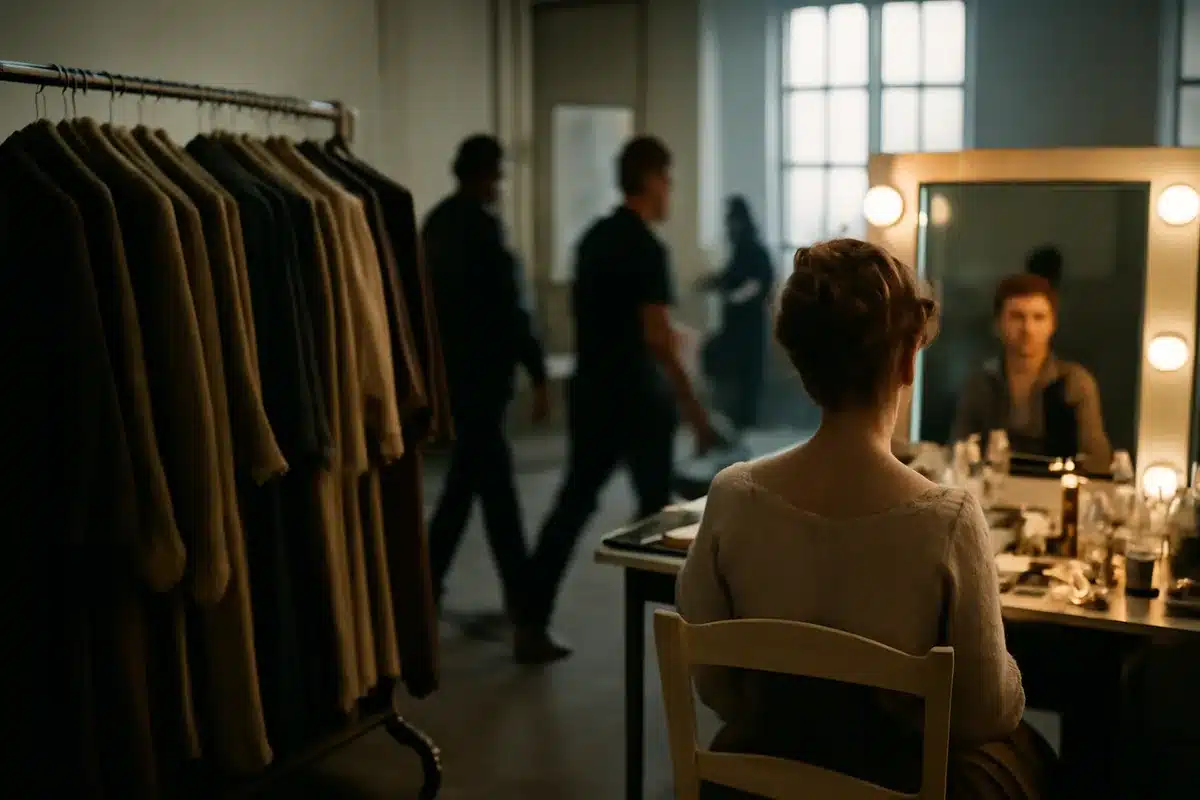
At Telluride this year a quiet, intimate film resurfaced questions about who gets to tell big-screen stories: Making Marie Antoinette, assembled from footage by Eleanor Coppola, revisits the shooting of Sofia Coppola’s lavish period drama and underlines the ongoing invisibility of female filmmakers in major festival lineups. Its release now — posthumously completed after Eleanor’s death in 2024 — feels timely amid renewed debate over representation at Venice and beyond.
Eleanor’s documentary is not a blow-by-blow exposé of production meltdown; instead it privileges small gestures, candid notes and the sidelines of a huge set. Voiced in the film by Diane Lane, Eleanor positions herself as an observer who nevertheless notices the tiny tensions that can shape a director’s career: how crew dynamics, wardrobe schedules and offhand remarks build or erode authority.
Seen as a companion piece to Sofia Coppola’s 2006 feature, the film offers more than celebrity glimpses. It records the decisions that define an auteur’s signature — not least the carefully chosen music and the deliberate, often understated direction Sofia applies to actors — while also revealing the practical costs of staging history, from time lost to elaborate hair and makeup to the scale of coordination required on a multi-million-dollar shoot.
On the broader stage, Eleanor’s film arrives against a stark reality: major festivals and industry panels continue to show a shortage of woman-directed films in top competitions. This season’s Venice selection, for example, included only a single film fully directed by a woman in the main Competition, an imbalance that critics and creators say cannot be cured by token gestures such as bringing women onto juries alone.
The documentary takes on additional weight because Eleanor herself struggled with the question of creative voice late in life. She recorded private reflections about feeling sidelined while supporting a family and a filmmaking household, then turned those reflections into an active creative choice: making her own film for the first time in her seventies and completing a feature debut years later. That trajectory reframes the documentary as more than a set diary — it’s a meditation on the limited windows offered to women in cinema and the alternatives they carve out.
For viewers who know Sofia Coppola’s work, the film is a trove of backstage detail. For aspiring directors and producers, it functions as a practical case study, with lessons about leadership, scale and artistic consistency.
- Leadership under pressure: Small gestures—tone with actors, decisiveness on set—signal who’s truly leading.
- Production trade-offs: Elaborate costumes and hair can cost a day’s shooting per week; time is an expense as real as money.
- Aesthetic persistence: Recurrent music choices and restrained direction show how a coherent style is assembled, shot by shot.
- Late-blooming creativity: Eleanor’s own late-career filmmaking underscores alternative paths to authorship.
Film details
| Title | Making Marie Antoinette |
| Festival | Telluride |
| Director | Eleanor Coppola |
| World sales | Mubi |
| Running time | 1 hr 26 mins |
Moments in the film land precisely because they’re modest: a mother’s offhand critique of how her daughter runs a set becomes an index of generational change; a remark about feeling “too small” to helm a $40 million production illuminates the credibility gap many women face. Those fragments add up into a larger argument — that visibility in cinema is shaped as much by the quotidian habits of production as by public accolades.
Viewed today, Making Marie Antoinette matters because it reframes the familiar festival conversation in human terms. It is an archival gesture and a subtle act of advocacy, reminding audiences and industry figures alike that who gets to be seen behind the camera remains a contested, consequential issue.
Similar Posts
- Francis Ford Coppola backs new documentary on Steadicam pioneer Garrett Brown
- Telluride surprise film lands studio buyer, triggers frantic industry scramble
- Dhurandhar sequel surges at specialty box office: Pout-Pout Fish and Met Opera draw crowds
- Oscar predictions 2027: Telluride reshapes Best Picture race as TIFF lines up
- Léa Drucker dazzles at Cannes in a woman’s life: gripping portrait of a doctor fighting to survive

Hello, I’m Declan. I share my film reviews and discoveries with you to enrich your moviegoing experience.