
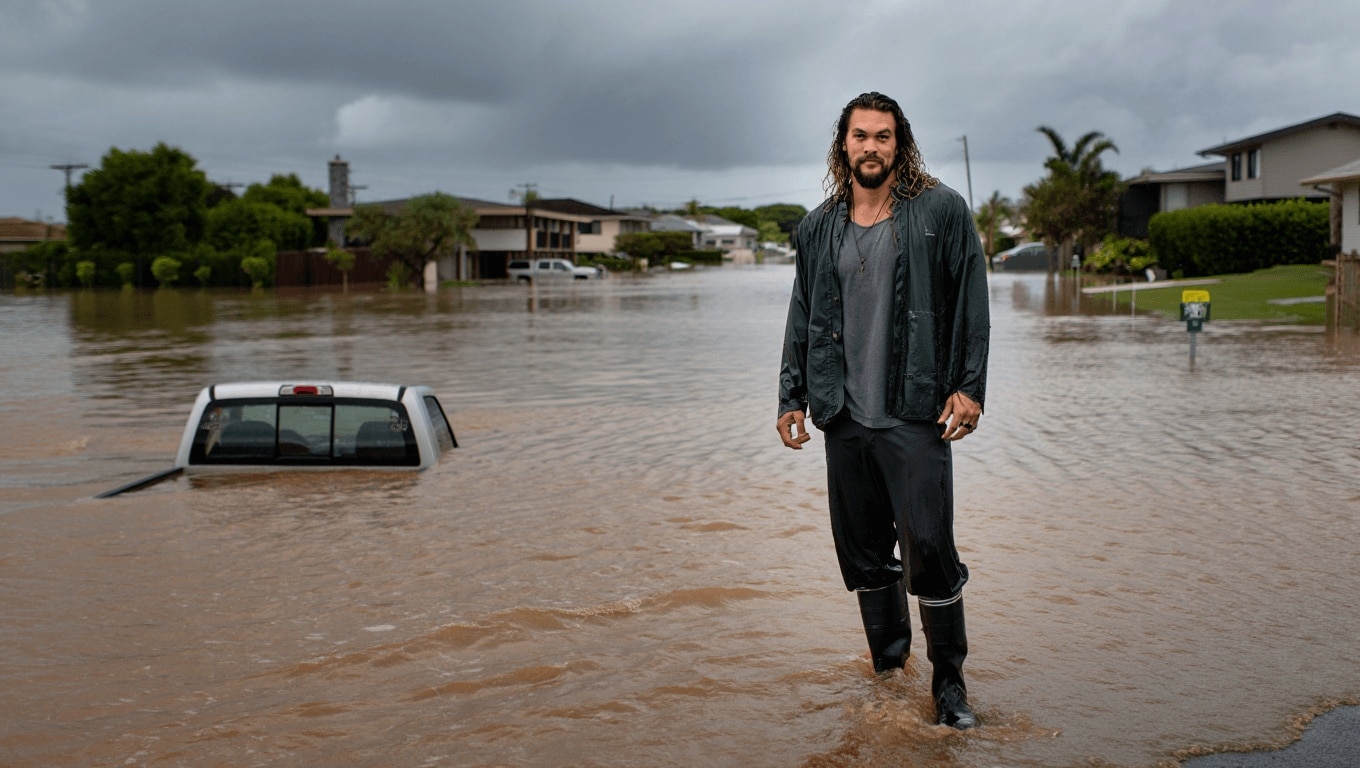
Actor Jason Momoa and his family were among thousands who left Oʻahu’s North Shore as a powerful storm system — the second Kona low to strike the islands this week — produced what officials are calling the worst flooding in the area in about two decades. The situation remains fluid: flood watches are in effect for multiple islands and emergency crews continue to assist affected communities.
Momoa confirmed his family is safe in a now-expired Instagram Story and urged others to take precautions. He postponed a planned appearance on Oʻahu and said he would share details about a relief fundraiser; he has also been sharing footage of neighbors organizing food and supplies.
Storm impact and official response
Governor Josh Green reported no fatalities and no one missing as crews focused on search and rescue operations. Local authorities say more than 200 people have been rescued and fewer than a dozen were treated at hospitals for hypothermia.
Earlier in the weekend, rising water and concerns over a possible dam failure prompted mandatory evacuation orders for more than 5,000 residents north of Honolulu. Those orders have since been lifted, but many roads remain closed and a statewide flood watch continues through Sunday evening.
- Areas under flood watch: Oʻahu, Maui, Molokaʻi, Lānaʻi, Kahoʻolawe and the Big Island
- Evacuations: More than 5,000 people ordered out of high-risk zones earlier in the storm
- Rescues: Over 200 people pulled to safety by emergency responders
- Health reports: Fewer than 12 treated for hypothermia at hospitals
The rains are tied to a Kona low — a seasonal cyclone pattern that can deliver prolonged, heavy precipitation across the islands. Officials warn that while immediate evacuation orders have eased in some places, flood risks and infrastructure disruptions can persist for days after the heaviest downpours.
Community response and relief efforts
Momoa has been documenting neighborhood relief efforts he and his partner, Adria Arjona, helped coordinate before the second storm arrived, bringing food and supplies to displaced residents. He reposted calls for donations to support the North Shore, and said more organized fundraising details would be announced soon.
Local community centers, non-profits and volunteers have mobilized alongside official responders, concentrating on people who were already vulnerable before the storms — including those experiencing homelessness.
What this means now: recovery will hinge on continuing emergency access, restoring power and clearing damaged roads so relief can reach isolated neighborhoods. Residents should stay alert to updates from county and state officials and heed any renewed shelter or evacuation notices.
How to stay safe and help
If you are in an affected area, follow guidance from emergency services and avoid crossing flooded roads. Simple, immediate actions can reduce risk and help neighbors:
- Check local government alerts and official social channels for evacuation and road closure updates.
- Report trapped or stranded people to emergency dispatch rather than attempting high-risk rescues yourself.
- Donate through verified relief organizations or local community groups coordinating supplies; wait for confirmed fundraising details when possible.
- Look out for vulnerable neighbors — especially the elderly and those without shelter — and pass along information about designated relief centers.
Authorities continue to monitor weather and infrastructure conditions. For residents and visitors, the immediate priority remains safety and ensuring that relief can reach the hardest-hit communities as recovery begins.
Similar Posts
- Chris Pratt reveals massive Hawaii storm damage at Jurassic World set
- Goose concert at Madison Square Garden: attendee dies following fall
- Rihanna shooting suspect arrested: woman faces attempted murder charge over home incident
- Seized documentary at Bentonville exposes flawed raid that crippled Kansas small-town newspaper
- Felipe Bustos Sierra opens up about Everybody to Kenmure Street: Emma Thompson joins podcast

Hello, I’m Declan. I share my film reviews and discoveries with you to enrich your moviegoing experience.