
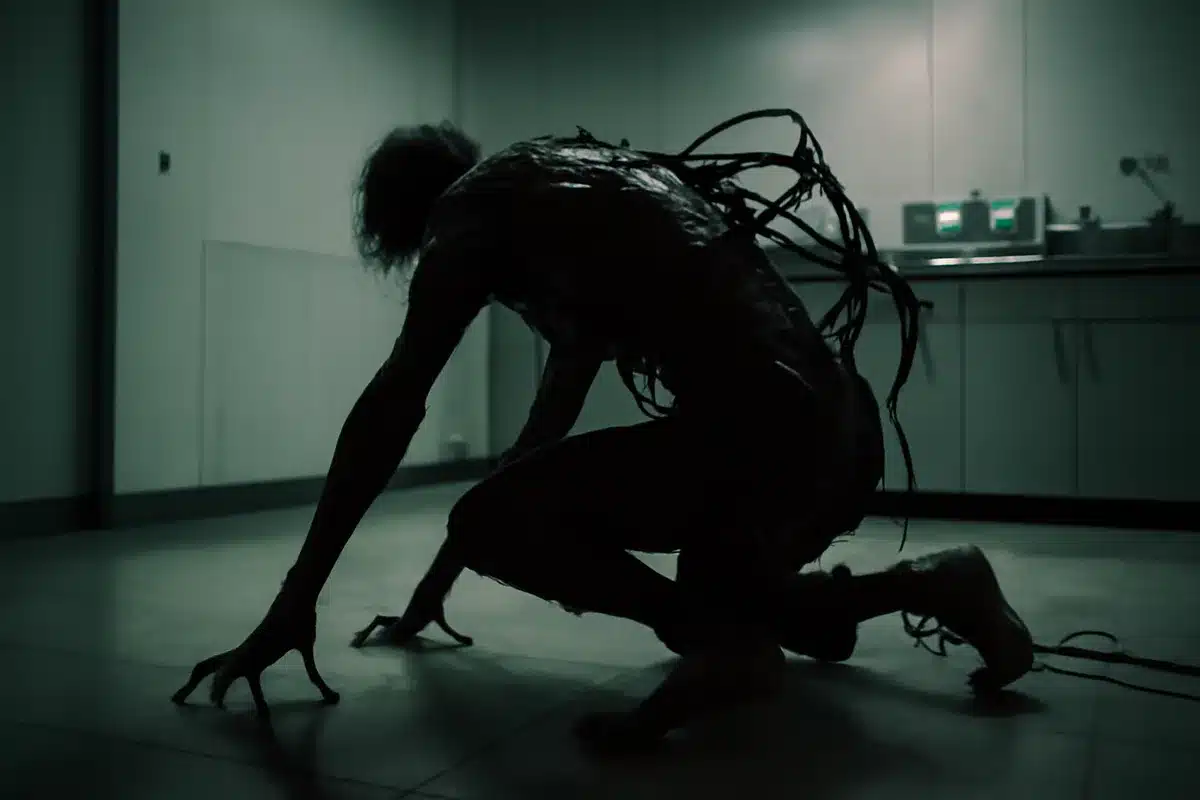
Today marks the final order cutoff for Marvel’s new Midnight line — a deadline that makes the imprint’s flagship titles immediately relevant to retailers and readers. At the center of that launch is a darker, horror-leaning take on Spider-Man that its creator says reworks the familiar lesson of power and responsibility into something bleaker: **power makes monsters**.
Writer Phillip Kennedy Johnson and artist ScieTronc are steering the book toward body-horror territory, drawing on cinematic and manga influences rather than the hero’s mainstream tone. Johnson frames this Spider-Man as a teenager whose origin twists into grotesque transformation, with the arachnid element fused into his body rather than a gradual mutation into a literal giant spider. The result, he says, is a Spider-Man story designed to unsettle as much as it thrills.
The creative team leans into specific aesthetic cues — nitrogen-chill atmosphere, biological alterity and visual references that echo the work of filmmakers known for visceral horror, and the detailed character work familiar from Japanese comics. ScieTronc’s art reportedly gives the protagonist a youthful, manga-inflected look, including distinctive goggles that recall wartime aviator design.
Johnson also emphasizes that this is his concept from the ground up, developed with editorial sign-off but intended to be a singular creative vision rather than a corporate imposition.
What changes in the character’s theme
Where classic Spider-Man stories revolve around the maxim that great power brings great responsibility, Johnson’s version reframes the takeaway. In this universe, Peter Parker was taught a different lesson by his late father: that power often warps people and institutions. The series sets Parker up as someone who still believes in decency and duty, but who is repeatedly confronted by a world that rewards monstrous behavior.
The implication: rather than a straightforward morality play, the series promises a long-form struggle against systemic forces that weaponize science and wealth — a narrative closer in tone to grim, street-level hero stories than to lighthearted superhero fare.
How the horror elements play out
Oscorp is central to the new arc. The corporation’s experiments produce human-animal hybrids and set Peter on a collision course with its militarized science programs. Johnson teases “Cronenberg-style” body transformations and escalating bioengineered threats — including developments prompted by what the creative team calls the “Parker incident.”
That incident becomes a narrative fulcrum: Oscorp’s misuse of Parker’s condition accelerates their quest for post-mortality technologies, and it leads to new, engineered antagonists intended to challenge — and potentially eclipse — this Spider-Man.
- MIDNIGHT SPIDER-MAN #1
Writer: Phillip Kennedy Johnson · Art: ScieTronc
A Queens youth becomes a grotesque hybrid after Oscorp’s experiments; the corporation then seeks to replicate his mutation to create a new class of human-animal weapons. Release: October 7, 2026 — $4.99
- MIDNIGHT SPIDER-MAN #2
Writer: Phillip Kennedy Johnson · Art: ScieTronc
Peter Parker’s whereabouts become the city’s mystery as Oscorp reviews security footage and employees vanish; the trail points to a spider-shaped urban legend. Release: November 18, 2026 — $4.99
- MIDNIGHT SPIDER-MAN #3
Writer: Phillip Kennedy Johnson · Art: ScieTronc
The “Parker incident” forces Oscorp to push forward with synthetic mutants; within secret labs, new horrors emerge that threaten to render Spider-Man obsolete. Release: December 16, 2026 — $4.99
Johnson says the creative schedule is on track: the first three issues are complete and work on issue four is underway. He also describes long-term plotting that plants narrative seeds meant to pay off across multiple years, suggesting the title is intended as a slow-burn project rather than a short novelty.
Why this matters now: the Midnight relaunch is one of Marvel’s clearest moves to blend horror sensibilities with mainstream superhero storytelling at scale. For readers, retailers and the broader comics conversation, the series could shift how Spider-Man’s moral core is debated and dramatized — especially if the book’s darker themes resonate with an audience already open to genre hybrids.
Similar Posts
- Marvel’s midnight Spider-Man issue channels The Human Centipede: fans stunned
- Hulk War: Infernal Rage — Phillip Kennedy Johnson, Nic Klein to conclude Infernal
- Absolute Batman #24 orders surge to 487,000: can issue #25 top that?
- Spider-Man relationship sparks immigration uproar: will Trump respond?
- Infernal Hulk #7: X-Man killed in graphic, irreversible death

Hello, I’m Jax. I guide you through the latest comics releases and enrich your geek universe.