
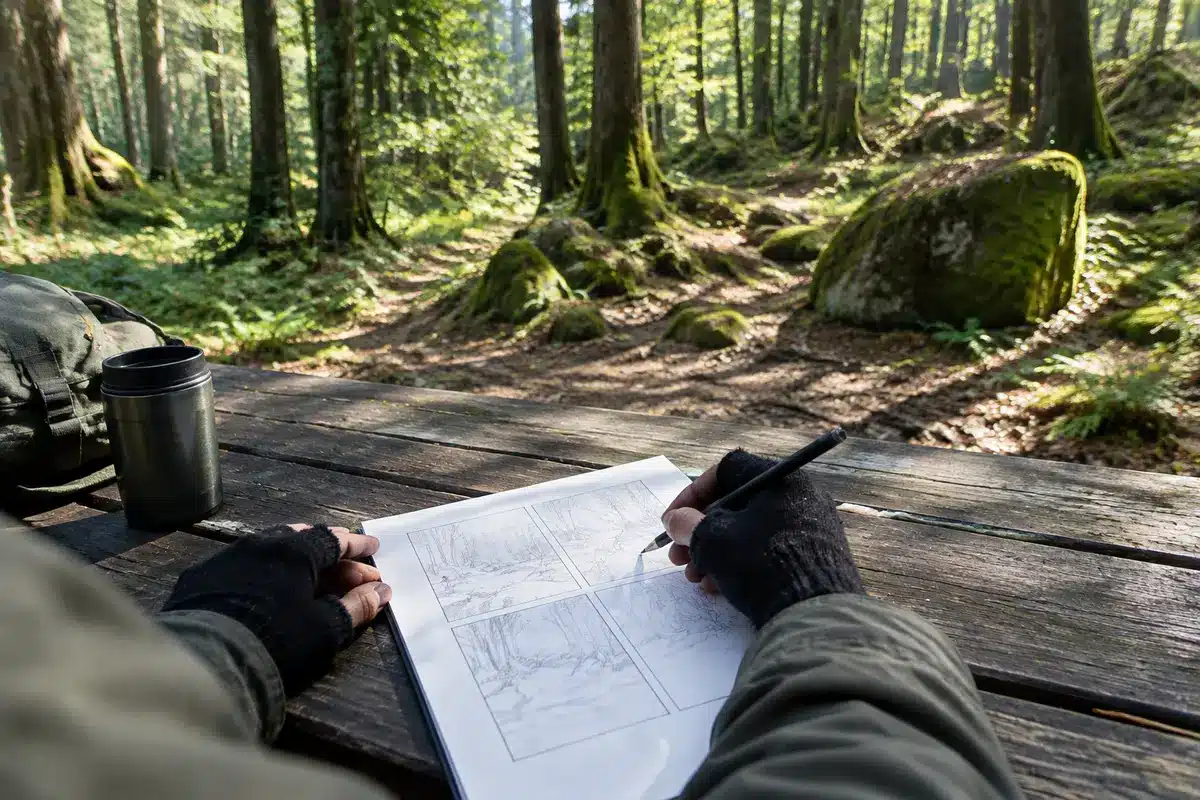
Mark Millar revealed at a recent High Vis Comic Con appearance in Kings Heath that his next project will take place entirely in a forest — a creative choice that underlines how comics can accomplish big, cinematic moments without the heavy price tag of filmmaking. The announcement matters now because it highlights both a practical shift for creators and a potential stylistic push toward atmosphere-driven stories that could open work for artists who enjoy rendering nature.
Speaking from a church venue where he was interviewed by writer and former Bleeding Cool contributor Olly MacNamee, Millar framed the new concept as an experiment in scale and economy. He stressed the important difference between the two mediums: in comics, sprawling scenes and large crowds can be produced on the page without the logistical and financial overhead required on a film set.
Why a single setting makes sense
For a writer-producer accustomed to moving between panels and screens, choosing a single, contained setting is both an artistic decision and a strategic one. A forest backdrop lets a creator focus on mood and detail — the sort of thing that reads differently on the page than it would when translated to a production that needs locations, extras and elaborate builds.
That flexibility can reshape how stories are pitched and produced. With streaming platforms tightening budgets and larger projects facing development hurdles, the comic-first route gives creators freedom to stage ambitious scenes on paper and then let adaptations follow only if the audience and economics align.
What this means for artists and publishers
Millar’s plan is a practical reminder that comics remain a place where scale is controlled by imagination rather than set construction. For illustrators who relish texture, shadow and foliage, a woods-based title offers sustained opportunities to showcase craft and build atmosphere episode after episode.
- Work opportunities: Artists skilled at landscapes and natural detail may see more demand.
- Creative freedom: Writers can stage grand or intimate scenes without immediate budgetary constraints.
- Adaptation strategy: Publishers can develop a title in comics first, then pursue film or TV adaptations with a clearer creative blueprint.
- Audience trends: Recent successes in forest- and nature-centered horror suggest a receptive market for moody, isolated settings.
Millar is no stranger to projects that later become screen properties. The Scottish writer, whose credits include high-profile Marvel runs and several creator-owned series, has seen multiple works adapted for film and television. His Millarworld imprint was acquired by Netflix in 2017, giving the studio rights to his creator-owned catalogue — a connection that makes the new, forest-bound comic notable for industry watchers tracking what might come next to streaming platforms.
Readers should not expect an immediate film announcement; instead, this move signals how creators are rethinking form and production in response to changing industry economics. A comic set entirely in the woods is a low-overhead canvas that can still deliver the atmospheric intensity and large-scale spectacle audiences increasingly crave.
Whether this sparks a wider “treecore” trend or simply becomes an inventive one-off, the choice highlights a practical truth about modern storytelling: sometimes constraint breeds the most ambitious work.
Similar Posts
- Werther Dell’Edera tapped for Absolute Batman guest-artist spotlight
- Teaneck creator Neil Kleid discusses role of Jewish artists in early comics
- G.I. Joe: The Rise of Cobra homaged one of Marvel’s best comics, Yahoo reports
- Rosario Dawson says she was snubbed by Spider-Man: Claire Temple cameo cut from Brand New Day
- Death to Pachuco: Image Comics limited series from Henry Barajas and Rachel Merrill

Hello, I’m Jax. I guide you through the latest comics releases and enrich your geek universe.