
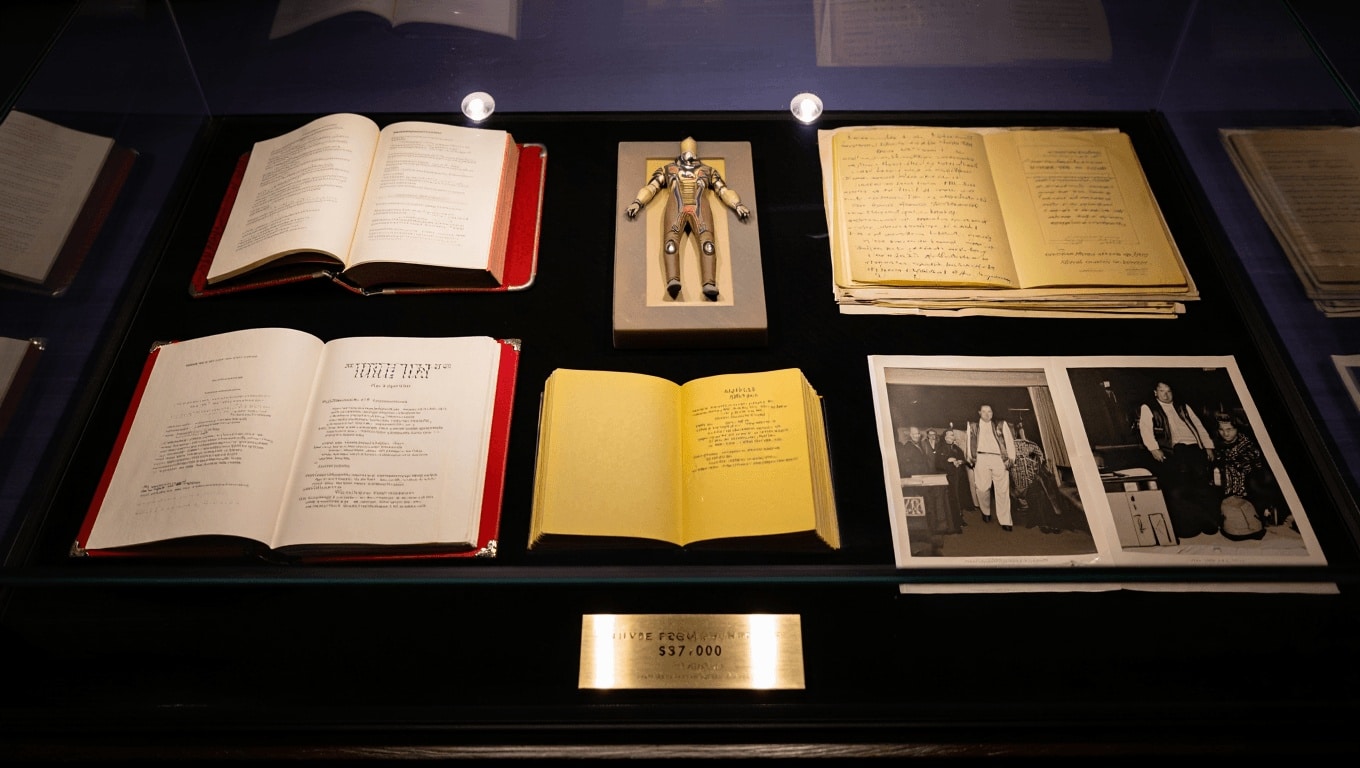
Collectors and film historians are being offered a rare window into the making of David Lynch’s controversial 1984 adaptation of Frank Herbert’s novel, as Peter Harrington Rare Books has placed a sizable production archive for sale. Priced at roughly $37,000, the trove revisits a troubled shoot that has since become a touchstone for fans and scholars alike—and arrives as interest in cinematic versions of Dune surges once more.
What’s in the box
The material comes from the personal holdings of production illustrator Ron Miller and documents the visual development of Lynch’s film during its Mexico City shoot. It includes a broad mix of analog media and original art that maps the practical, hands-on approach used to build an otherworldly universe long before today’s digital effects dominated the craft.
- About 85 photography slides and some 60 printed photos capturing sets, crew moments and candid production scenes
- Roughly 65 strips of film negatives and assorted contact sheets
- Approximately 43 leaves of preliminary artwork, combining Miller’s concepts with multiple pieces by production designer Tony Masters (several signed)
- Costume sketches, scale models for Guild Navigators and starships, and on-set stills showing Lynch at work
Why the archive matters now
At first glance the lot is an archival curiosity for dedicated fans; at a deeper level it documents how filmmakers translated dense, literary world-building into physical props, costumes and set dressing. That process is especially valuable today because contemporary adaptations—most recently Denis Villeneuve’s acclaimed two films—rely heavily on CGI, making these artifacts a record of a different filmmaking era.
The archive also arrives in the wake of a high-profile estate sale of Lynch’s personal effects in June 2025, which fetched multimillion-dollar returns and demonstrated robust market appetite for auteur memorabilia. For museums, academic programs and serious private collectors, the new offering provides fresh primary sources for research into design practice, production constraints and collaborative workflows on a large-scale studio picture.
Context and continuity
Lynch stepped into the project after rising to prominence with The Elephant Man, inheriting a screenplay and a production with ambitious scope but limited resources. The film’s fraught history is often compared to Alejandro Jodorowsky’s famously unrealized 1970s attempt—a sprawling, psychedelic vision whose concept art became legendary precisely because the movie never reached screens.
Unlike Jodorowsky’s preproduction bible, which existed mainly in replication and myth, this archive offers tangible artifacts from an actual shoot: test models, on-set photography at Estudios Churubusco in Mexico City and original sketches for key elements such as the sandworms and imperial architecture.
When Lynch’s film opened in December 1984 it struggled both critically and commercially, failing to recoup its reported budget. Over subsequent decades, however, it acquired a devoted following; what many called failure at release has been reassessed by cinephiles who prize the film’s uncompromising strangeness.
What collectors and researchers should note
The materials are being handled through Peter Harrington’s catalog titled Quo Vadis? Visions of the Future, with select items shown at the gallery’s London and New York sites and the full archive available via the dealer’s online listings.
Practical considerations for potential buyers include provenance verification (the archive’s chain traces to Miller), condition of negatives and prints, and the legalities around reproduction or exhibition. Institutions weighing acquisition will likely compare the archive’s documentary value against its price—an appraisal shaped by recent market behavior around Lynch items such as the 2025 Julien’s Auctions sale that drew intense bidding activity.
Perspective
Beyond its immediate appeal to collectors, the archive is a compact lesson in adaptation: how production designers, illustrators and prop makers negotiate technical limits while trying to honor a complex source text. For students of cinema, the collection illuminates creative decision-making at a moment when studio expectations, budget pressures and a director’s distinctive sensibility collided.
With Denis Villeneuve’s Dune films keeping Herbert’s saga in the cultural spotlight and a third installment scheduled, this material reconnects modern audiences with an earlier, tactile chapter of cinematic experimentation. Whether held in a private collection or studied in a public institution, these artifacts help fill gaps in the production record of one of the most debated film adaptations of the last half-century.
Similar Posts
- Jane Lynch on Happy’s Place: why Val lied and what comes next for Gabby
- Tom Verlaine vinyl up for sale: rare records from the musician’s personal stash
- Peaky Blinders sequel recasts Duke Shelby with Jamie Bell: new photos reveal character
- Jack Kirby Museum acquires 50-plus Richard Howell pages: rare originals join public collection
- Bad Idea unveils September 2026 solicit list featuring Brightburn director David Yarovesky

Hello, I’m Declan. I share my film reviews and discoveries with you to enrich your moviegoing experience.