
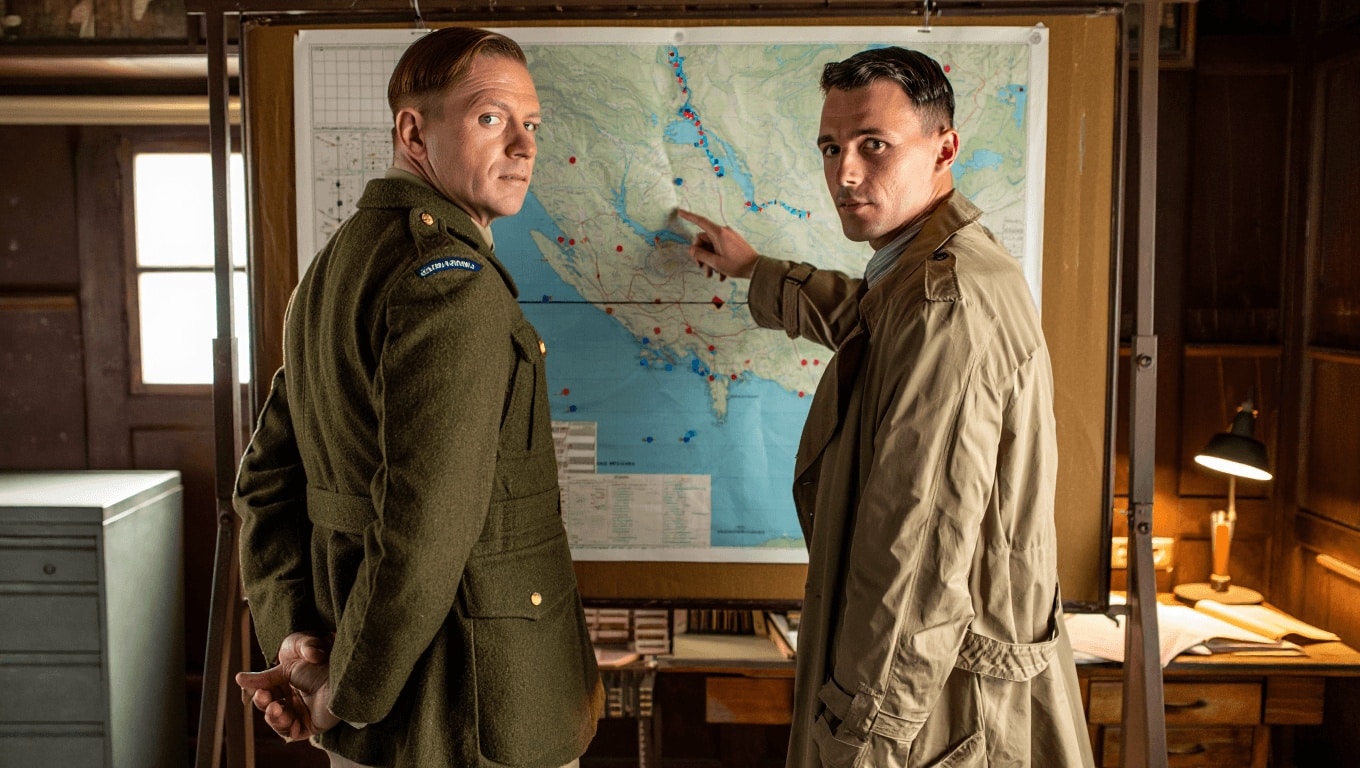
On the eve of the 82nd anniversary of D-Day, a new film reframes one of World War II’s best-known moments as a tense debate about science, judgment and timing. Pressure turns the lesser-told story of meteorological forecasting—and the dispute that decided the invasion date—into a compact, high-stakes drama about leadership under uncertainty.
Directed by Anthony Maras and adapted from David Haig’s stage play, the film zeroes in on the three-day window before the Normandy landings when military planners argued not over ships and guns, but over clouds and wind. The clash between competing forecasts becomes the engine of the story: one side pushing for an earlier launch, the other warning of catastrophic conditions if commanders proceeded without delay.
The argument that shaped history
The narrative unfolds largely in council rooms and briefing chambers, where Allied leaders must choose whom to trust. At the center is the wariness of Dwight D. Eisenhower, portrayed with restraint and resolve, who listens to experts on both sides before making a decision that would shape the course of the conflict. Opposing meteorologists are drawn as sharply different types—one a confident, established adviser with a track record in past campaigns, the other a meticulous scientist whose forecast runs counter to conventional wisdom.
Watching the back-and-forth, the film converts technical forecasting into dramatic pressure: calendars, tide tables and cloud cover take on the weight of life-or-death decisions. That transformation is less about spectacle and more about the moral and practical burdens of leadership.
| Title | Pressure |
| Distributor | Focus Features |
| Director | Anthony Maras |
| Writers | Anthony Maras, David Haig |
| Principal cast | Andrew Scott, Brendan Fraser, Kerry Condon, Chris Messina, Damian Lewis |
| Rating | PG-13 |
| Running time | 100 minutes |
Andrew Scott’s portrayal of meteorologist Dr. James Stagg anchors the film. He gives the character a quiet, professional authority—someone whose credibility comes from careful observation rather than oratory. Beneath that professional front, the script introduces private strain: family concerns and the awareness of what a single recommendation can cost. It’s the kind of measured performance that keeps tension taut without melodrama.
Brendan Fraser, cast as Eisenhower, brings a steady gravitas to the role. He conveys the burdens of command through small gestures and attentive listening, showing a leader who must temper instinct, loyalty and strategic necessity. Damian Lewis and Chris Messina supply contrasting energy as rival officers and advisers, while Kerry Condon offers a humane counterpoint in a role that grounds the political theater in personal consequences.
The technical craft supports the restrained storytelling. Production design keeps the rooms cluttered with maps and instruments, and Volker Bertelmann’s score underscores the film’s atmosphere rather than overwhelming it. Cinematography and editing interweave archival, colorized footage with the dramatic scenes in a way that feels integrated rather than intrusive—an effort to remind viewers of the real world consequences behind the debate.
- Why it matters now: the story is a reminder that expert analysis can clash with conviction—and that leaders must adjudicate between competing truths in real time.
- Historical focus: the film highlights an operational detail often overshadowed by battlefield images: weather forecasting as a determinant of strategy.
- Performance watch: Andrew Scott’s subtle turn and Brendan Fraser’s calm authority are the film’s emotional anchors.
- Craft: careful production design and archival integration give the film documentary-like credibility.
- Takeaway: Pressure treats scientific judgment and moral responsibility as inseparable, offering lessons about decision-making applicable beyond wartime.
Pressure doesn’t reframe the outcome—D-Day’s success remains a known historical fact—but it does reorient attention toward the arguments that made that outcome possible. For contemporary audiences the film functions as both a piece of historical recovery and a timely parable about evaluating expertise when the costs of error are enormous.
Released near the D-Day anniversary, the movie invites viewers to reconsider what leadership looks like under constraint: listening closely to evidence, tolerating unpopular conclusions and accepting the burden of choice. Those themes help the film extend beyond its wartime setting to questions leaders and publics still face today.
Similar Posts
- Elon Musk: Ike Barinholtz teases an intentionally over-the-top take in Artificial
- Pete Hegseth faces backlash from Gavin Newsom and critics over Pulp Fiction prayer gaffe
- Artful Dodger won’t return after season 3: Hulu and Disney+ confirm
- American Muscle rights up for sale by lead actor
- CBS 60 Minutes retains Lesley Stahl, Bill Whitaker and L. Jon Wertheim after Scott Pelley’s exit

Hello, I’m Declan. I share my film reviews and discoveries with you to enrich your moviegoing experience.