
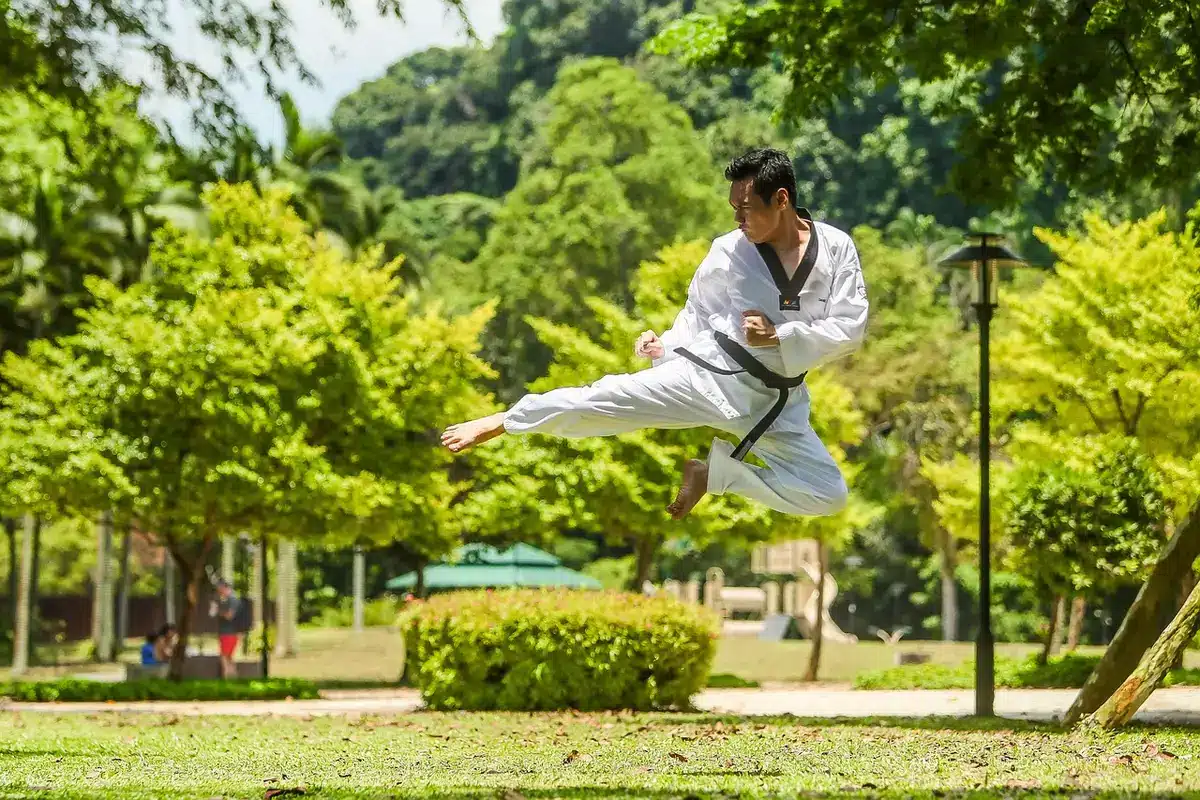
The new big-screen take on Street Fighter leans hard into authenticity: the film’s stunt team rebuilt the game’s varied combat languages so characters move and clash like their pixel counterparts. That attention to choreography matters now—especially with the film opening in IMAX on Oct. 16—because fans have long judged adaptations on how true they feel in the fight scenes.
Stunt coordinator John Valera approached the project as a cataloguing exercise as much as a choreography job, studying distinct martial traditions and character histories to shape each duel. Actors say that meant more than copying moves; it was about giving every fighter a recognizable motion vocabulary so battles read as clashes of styles, not generic brawls.
Noah Centineo, who portrays Ken Masters, has pointed to that research as central to the production’s success. He credits the stunt team with making sure the film includes the franchise’s hallmark moves while keeping them anchored in each character’s background and temperament. The result, according to those involved, is a string of set-piece fights that aim to satisfy casual viewers and longtime players alike.
What the team set out to do
Translating a decades-old fighting game into cinema posed two main problems: how to preserve signature attacks that fans expect, and how to stage combat that reads well on-screen. Valera’s response was detailed choreography tied to character identity—stretching from formal martial arts to unconventional, genre-specific gestures—so encounters feel like meetings of different schools, not clones of the same moves.
- Faithful optics: Key game moves are referenced visually so fans can spot them without the movie devolving into a literal replay of button inputs.
- Character-driven combat: Each fighter’s background informed posture, rhythm and attack choices, giving scenes a distinctive flavor.
- Cinematic clarity: Fights were staged to read in slow motion, close-ups and wide shots—helping viewers follow exchanges even when choreography is complex.
The cast is large and deliberately eclectic, reflecting the game’s global roster. Below are the principal performers and the characters they bring to life in the new adaptation:
- Noah Centineo — Ken Masters (central rival to Ryu; flashy, aggressive striking).
- Callina Liang — Chun-Li (quick, acrobatic attacks and trademark aerial moves).
- Joe Anoa’i (Roman Reigns) — Akuma (a darker, more supernatural combat presence).
- David Dastmalchian — M. Bison (villainous power and commanding, forceful strikes).
- Cody Rhodes — Guile (military stance and technique-driven fighting).
- Andrew Schulz — Dan Hibiki (parodic, showy fighter with comedic flair).
- Eric André — Don Sauvage (unpredictable and eccentric in style).
- Vidyut Jammwal — Dhalsim (flexible, yoga-inspired movement patterns).
- Curtis “50 Cent” Jackson — Balrog (boxing-influenced, power-forward approach).
- Jason Momoa — Blanka (animalistic, contorted movement and raw strength).
- Don Lee — Gouken (experienced master with disciplined technique).
- Orville Peck — Vega (graceful, blade-enhanced performance).
Director and co-writer Kitao Sakurai positioned the movie as both a celebration of the franchise and an effort to modernize its cinematic language. Unlike earlier adaptations—such as the 1994 film starring Jean-Claude Van Damme or the 2009 Chun-Li-centered reboot—this version emphasizes choreography as narrative: fights reveal character and history rather than functioning only as spectacle.
That approach carries practical stakes. For one, faithful and varied combat sequences can increase word-of-mouth among core fans who are vocal on social platforms. For another, staging fights with distinct physical logics helps the film hold up on large formats; an IMAX presentation rewards carefully constructed movement and gives each exchange room to breathe.
Adapting a video game’s mechanics into believable cinematic action is a delicate balance—too literal, and scenes feel clunky; too loose, and fans feel betrayed. According to cast and crew, the production aimed for a middle path: recognizable references to the game’s signature moves, embedded in fights designed for dramatic rhythm and visual clarity.
Street Fighter premieres Oct. 16 in IMAX. Viewers tuning in for the fighting will be watching how discipline, research and choreography attempt to turn decades of game lore into a coordinated, on-screen physical language.
Similar Posts
- Resident Evil: Austin Abrams praised by director Zach Cregger as his on-screen surrogate
- Price Is Right awards record daytime payout: biggest single-game prize in history
- Lamar Jackson injury jolts betting markets: Ravens Polymarket odds surge
- Video game movies: 10 must-see adaptations streaming now across top services
- Dungeon Crawler Carl coming to Peacock: what to expect and when it will stream

Hello, I’m Declan. I share my film reviews and discoveries with you to enrich your moviegoing experience.