
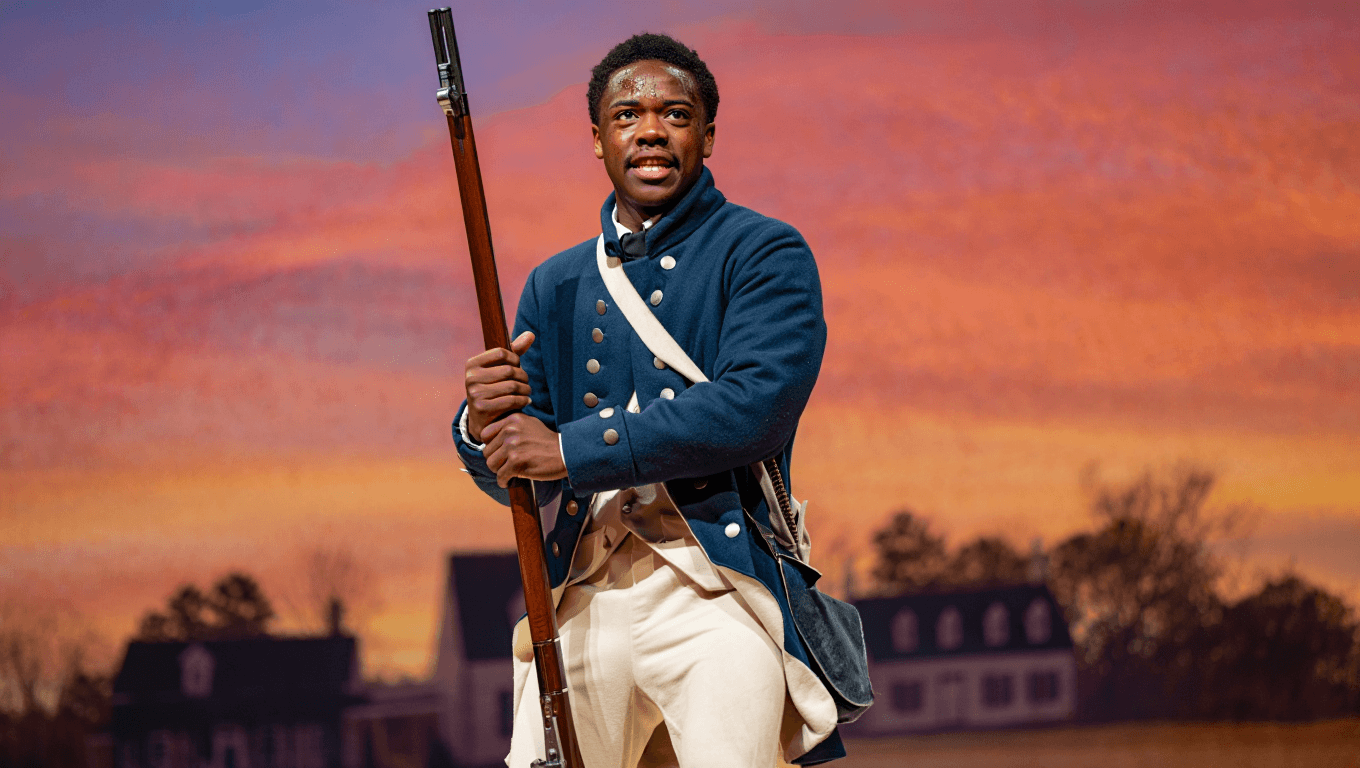
As the United States marks its 250th year, a new PBS documentary is using modern tools to reframe neglected stories from the Revolutionary era. Declarations: Black Americans and the Revolutionary War, which premieres June 29 at 10 p.m. ET on PBS, combines painted portraiture and generative technology to put rarely seen figures at the center of the historical record.
Directors Stacey Holman and Maya Tepler say conventional archives often fail Black-centered narratives, offering few authentic visual records and many demeaning depictions. To counter that gap, they collaborated with artist-researcher Hudson Campbell to produce oil portraits that were then animated with AI, aiming to restore a sense of individual presence and dignity to four people whose lives intersected with the fight for independence.
The film follows the stories of James Lafayette, Harry Washington, Elizabeth Freeman and Abraham Peyton Skipwith, tracing how each navigated the contradictions of a revolution promising liberty while upholding slavery and exclusion. The production team says the project was vetted by historians and reenactors to ensure its visual choices align with archival evidence.
Why this matters now: the documentary arrives amid growing debate over how generative technology should be used in journalism and cultural storytelling. Holman and Tepler position their film as a test case for pairing creative practice with historical rigor.
How the filmmakers approached reconstruction
Rather than rely solely on scarce period images, the directors commissioned Campbell to create historically informed paintings based on extant portraits and records. Those paintings were subsequently given motion and expression using AI-driven animation, a process the filmmakers describe as retaining the artist’s style while enabling the figures to occupy the screen more fully.
Holman and Tepler emphasize that the AI work did not replace artistic judgment; it extended Campbell’s vision. The creative choices — from costume details to facial features — were reviewed by an advisory group that included Colonial Williamsburg staffer and reenactor Stephen Seals, historian Dr. Ed Ayers, and filmmaker Sam Pollard.
Campbell’s images appear both as still portraits and as animated sequences. The filmmakers say even scenes without visible faces were influenced by the animator’s signature visual approach when AI models learned from his work over time.
- Directors: Stacey Holman and Maya Tepler
- Artist/Animator: Hudson Campbell
- Historical advisors: Stephen Seals, Dr. Ed Ayers, Sam Pollard
- Subjects profiled: James Lafayette, Harry Washington, Elizabeth Freeman, Abraham Peyton Skipwith
- Premiere: World premiere in New York; broadcast June 29, 10 p.m. ET on PBS
Context and implications
The film enters an evolving conversation about responsible AI use in media. The producers point to earlier projects that experimented with generative tools for historical reconstructions, but say their priority was centering human expertise and documentary ethics rather than allowing algorithms to dictate narrative choices.
For viewers, the result is intended to do more than dramatize past lives: it aims to broaden the visual archive available for Black experiences in early America and to model a workflow that other filmmakers and institutions might adapt when combining art, history and technology.
Critics and historians have been watching similar experiments closely, weighing potential gains — greater visibility and imaginative reconstruction — against risks such as creative overreach or misrepresentation when AI is used without careful oversight.
Declarations: Black Americans and the Revolutionary War will be one of the more visible examples this year of applying generative tools to public-history storytelling, offering a case study in balancing creative ambition with documentary standards as institutions rethink how to represent underdocumented pasts.
Similar Posts
- Jodie Foster questions AI use in F1 film: sparks debate over authenticity
- Library of Congress names six finalists for Lavine/Ken Burns film prize: winner gets $200,000
- Ghostbusters II documentary finally wraps after years in production: sales partner named
- Netflix raises content budget as AI drives big savings: Sarandos says it’s used in 300 projects
- Neve Campbell back with Party of Five creator: Dylan O’Brien leads new Hulu comedy

Hello, I’m Declan. I share my film reviews and discoveries with you to enrich your moviegoing experience.