
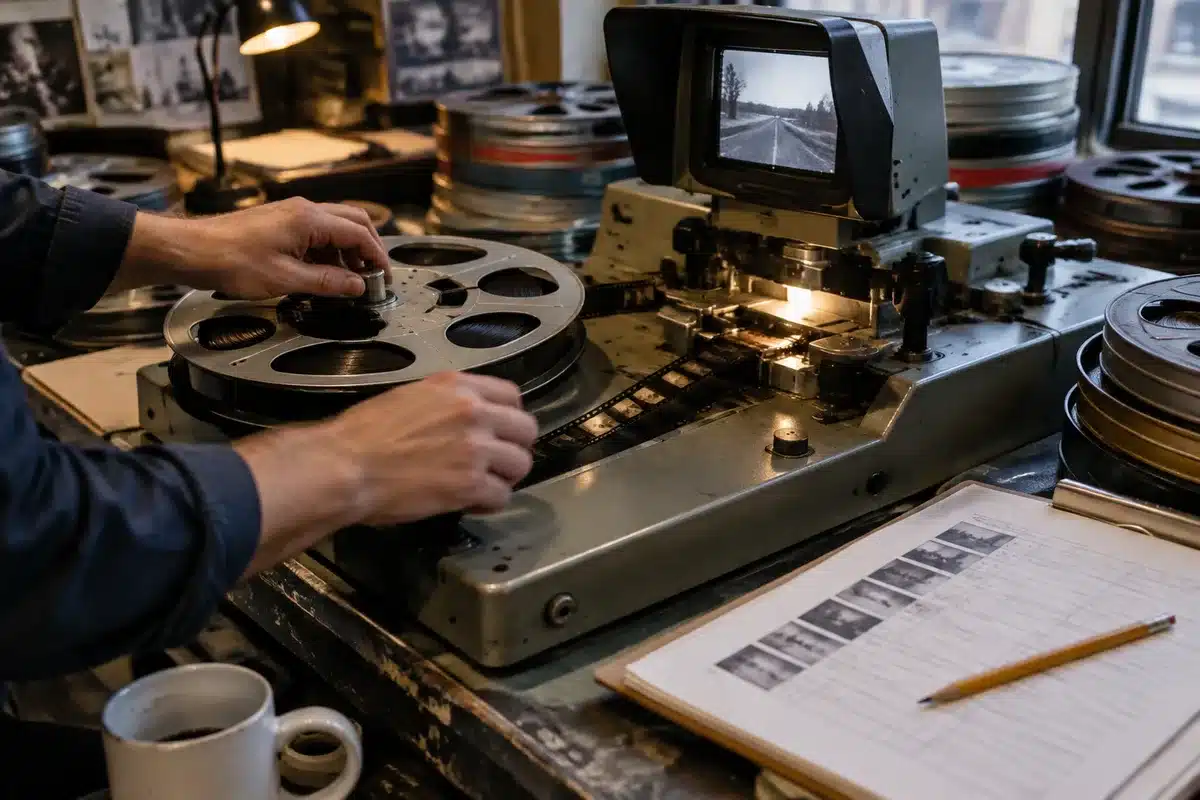
John Grover, a British film editor whose work shaped blockbusters and art-house classics alike, died in late September at 87. His son Tim told The Hollywood Reporter the editor passed away at his Buckinghamshire home after a brief illness; the family has not released further medical details.
Grover’s death matters beyond the film community: his cuts played a quiet but vital role in films that continue to influence directors, editors and streaming restorations today. Colleagues remember him as a steadying presence behind some of the 20th century’s most enduring cinematic moments.
Career highlights
Across more than 40 years in the cutting room, Grover moved between prestige projects and popular franchises, often adapting his approach to fit very different directors and styles. He won respect for balancing narrative clarity with rhythmic boldness, a skill visible whether he was shaping Stanley Kubrick’s visual epic or a high-octane Bond sequence.

- 2001: A Space Odyssey — credited on one of cinema’s most debated and studied films, which earned multiple Academy Award nominations.
- Labyrinth — Jim Henson’s fantasy remains a cult favorite for its inventive visuals and pacing.
- Six James Bond films — three edited by Grover: For Your Eyes Only, The Living Daylights and License to Kill; he also supported editing on The Spy Who Loved Me, Moonraker and Octopussy.
- Other notable work includes Doctor Zhivago, The Executioner, The Wild Geese and The Blue Bird; one of his earliest industry credits was as an assistant editor on 1963’s The Haunting.
Influence and industry response
Grover served as vice chairman of the British Film Editors, where colleagues say he offered mentorship and a calm leadership style. The organization paid tribute after his death, noting that board members valued his warm, modest presence and extended condolences to his family.

For editors and film historians, Grover’s passing is a prompt to revisit the craft of film cutting at a time when older work is being reexamined for restoration and home release. The techniques he used—measured rhythm, clean continuity and an eye for performance—remain instructive for today’s filmmakers.
What he leaves behind
Grover’s editorial fingerprints are still visible in films that circulate widely on streaming platforms and in curated retrospectives. His choices in pacing and transition helped shape narrative flow in mainstream British and international cinema, from sprawling period pieces to action-driven series.
He is survived by his wife, Jenny; his daughter, Camilla; five grandchildren; and two great-grandchildren. Those who worked with him point to a career that combined technical skill with a collaborative temperament—qualities that, colleagues say, made him a respected fixture in the industry.
Similar Posts
- Elsie Kelly dies aged 89: co-stars pay tribute
- Jimmy Cricket: fans mourn beloved comedian after brief illness at 80
- Robert Fox dies at 73: famed West End and Broadway producer behind Judi Dench, Maggie Smith
- Moritz Borman dead at 71: veteran producer behind Oliver Stone films, Terminator and The Crow
- Vincent Pastore dies at 80: David Chase, Edie Falco and others honor the Sopranos star

Hello, I’m River. I inform you about the latest pop trends and viral buzz to feed your curiosity.