
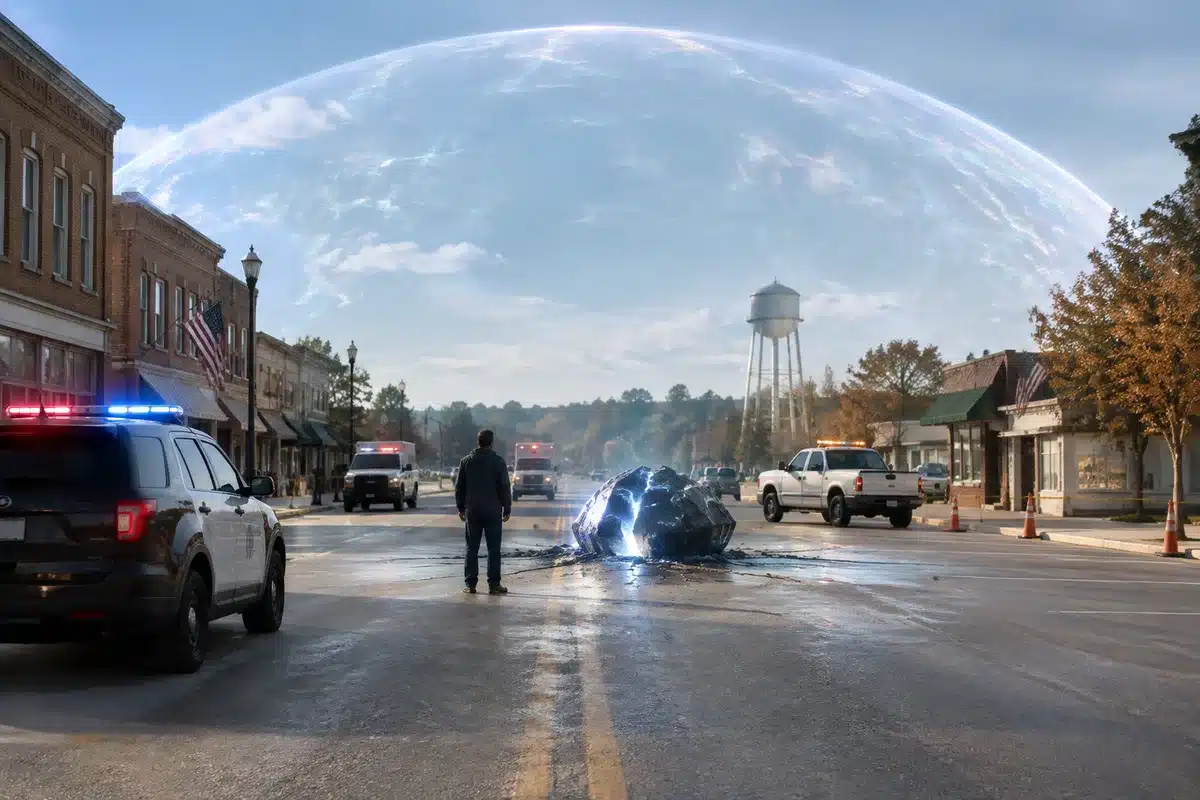
When CBS pulled the plug on Under the Dome in 2015, the show left more questions than answers — and a few deliberately ominous hooks meant to steer future episodes. Those unresolved beats still resonate with viewers and matter now as networks and streamers revisit dormant franchises for revivals or limited continuations.
The series, loosely adapted from Stephen King’s novel, ran three seasons and followed the residents of Chester’s Mill after an impenetrable dome isolated the town from the outside world. Military teams, politicians and journalists hovered at the perimeter while small groups inside tried to maintain order and unpick the cause of their confinement. Over time the drama shifted from survival logistics to a broader mystery about the dome’s origin and the strange influence spreading among the townspeople.
The third-season finale closed some immediate crises but left a clear roadmap for what might have come next. In the final scenes a broken alien egg and an electronic device combined to shatter the dome. Freed from the dome’s control, many residents were immediately taken into military custody to separate those affected by a mind-controlling force from the rest of the population.
Time jumped forward a year: key relationships had shifted, careers had changed, and one lingering threat remained. A central character’s marriage proposal was interrupted by political business; another former resident, presumed dead, surfaced in a Midwestern city with evidence that the extraterrestrial menace had not been neutralized. That closing image — a surviving alien egg and a vow that the threat would return — was left deliberately unresolved.
What the show left open
- Origin of the dome: Who or what created it, and with what purpose?
- The Kinship fallout: How would communities and authorities handle people who had been controlled or infected?
- Big Jim’s compass: The moral and legal consequences of his actions after breaking the egg.
- Barbie and Julia’s future: The personal and political pressures on a couple emerging from extraordinary circumstances.
- Dawn and the new egg: Whether the surviving specimen represented a local resurgence or a broader, organized return.
- Government and media response: Long-term quarantine, cover-ups, or public reckoning once the dome story spread.
Those loose ends suggested a season focused less on immediate survival and more on aftermath: reconstruction, accountability, and the social ripple effects of an otherworldly crisis. The show’s TV-specific deviations from King’s book opened original narrative pathways the writers could have exploited had they been given more time.
Why this still matters: beyond nostalgia, unresolved finales have commercial and creative value. Streaming platforms hunting for recognizable IP can use a left-open ending to pitch a limited series or revival that promises closure. For audiences, that final image of a surviving alien egg keeps the debate alive about whether the TV version ever intended to align with the novel’s conclusions or carve its own mythos.
Under the Dome’s cancellation froze those possibilities in place: some plotlines were tied up, but others were deliberately left dangling — a storytelling choice that preserves both frustration and opportunity. The show’s final moments, with a defeated town, a quarantined population and one last seed of extraterrestrial menace, remain a tidy snapshot of an ending that was really a beginning withheld.
Similar Posts
- The Lincoln Lawyer set to bow out on Netflix with season 5 finale
- Andrea Martin to spice up Best Medicine season 2 as feisty guest: exclusive
- Paradise Renewed scores third season on Hulu: what to expect next
- Watson dropped by CBS: series removed from network schedule
- Paul Pope cover for Bad Idea’s Lancer #1 ignites controversy: publisher used only the artist’s photo

Hello, I’m Beckett. I cover series and show news for you to make your evenings more captivating.