
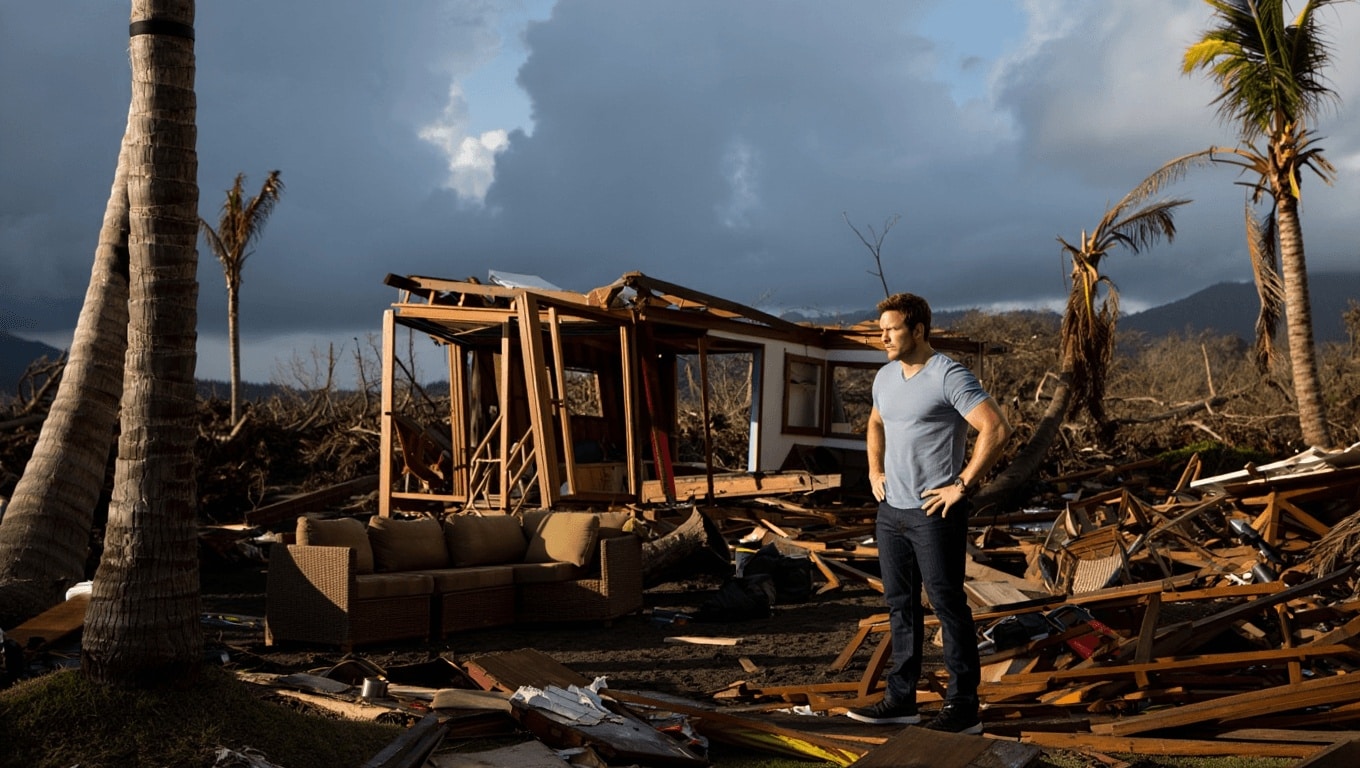
A well-known landmark from the 2015 film Jurassic World — the bungalow used as Owen Grady’s home — was destroyed during the recent storms that battered Hawaii, actor Chris Pratt said this week. The loss highlights how the extreme weather that inundated the islands has damaged not only communities but also locations tied to popular culture.
Pratt told Entertainment Weekly that a friend who lives on the ranch where the set stood notified him that a large tree toppled onto the structure during the downpours, leaving the bungalow “destroyed.” He passed along the update and expressed sympathy for the property owner.
Actor Jason Momoa, who lives on Oʻahu’s North Shore, also described dramatic scenes during the same weather event. In an Instagram Story he said he and his family evacuated their home as flooding intensified, power failed in parts of the island and conditions became unsafe for many residents.
The scale of the storm was substantial. A University of Hawaii report released after the event estimated roughly 2 trillion gallons of rainfall fell over a two‑week period, producing the worst flooding the islands have seen in about 20 years. That volume and duration overwhelmed infrastructure and natural drainage in multiple regions.
Quick facts from the storms
- Duration: Approximately 14 days of heavy rain in affected areas.
- Rainfall total: Estimated at 2 trillion gallons across the islands, per the University of Hawaii report.
- Affected zones: Widespread flooding on Oʻahu, including the North Shore, with rural ranchlands and coastal communities hit hard.
- Human impact: Evacuations, power outages and property losses reported; emergency services mobilized.
- Notable damage: Film-locations and private ranch structures — including the Owen Grady bungalow — suffered destructive impacts.
Beyond the immediate human and property toll, the storm raises practical questions for local owners and the film industry: what happens to iconic filming sites when private land is damaged, and how quickly can those places be repaired or preserved? For now, details about rebuilding or restoration remain unclear.
Residents described disrupted daily life and stretched emergency resources. “We got out of the North Shore,” Momoa wrote, noting his family was safe but emphasizing that many others were dealing with more serious losses as flooding swept through neighborhoods and rural properties.
The destruction of the bungalow is symbolic for fans who visit filming locations; it also represents one small part of a broader recovery challenge for Hawaii. Cleanup will require time, money and coordination between landowners, local authorities and, where applicable, insurance carriers.
State and local agencies continue to assess damage and prioritize safety. As investigators and community groups work through the aftermath, officials are compiling more detailed estimates of economic and cultural losses linked to the storms.
For now, the images and firsthand accounts from actors and residents alike underscore how an intense weather event can erase familiar landmarks overnight — and how recovery from such events must address both community needs and the preservation of places people recognize and remember.
Similar Posts
- Jason Momoa leaves north Oahu after historic floods: many residents still trapped
- Chuck Norris hospitalized after sudden health scare: updates expected
- Chuck Norris death confirmed at 86: fans mourn martial arts icon
- Jupiter HarbourFest is free this year, organizers say
- The Voice winner calls off headline show: fans told to seek refunds

Hello, I’m Declan. I share my film reviews and discoveries with you to enrich your moviegoing experience.