
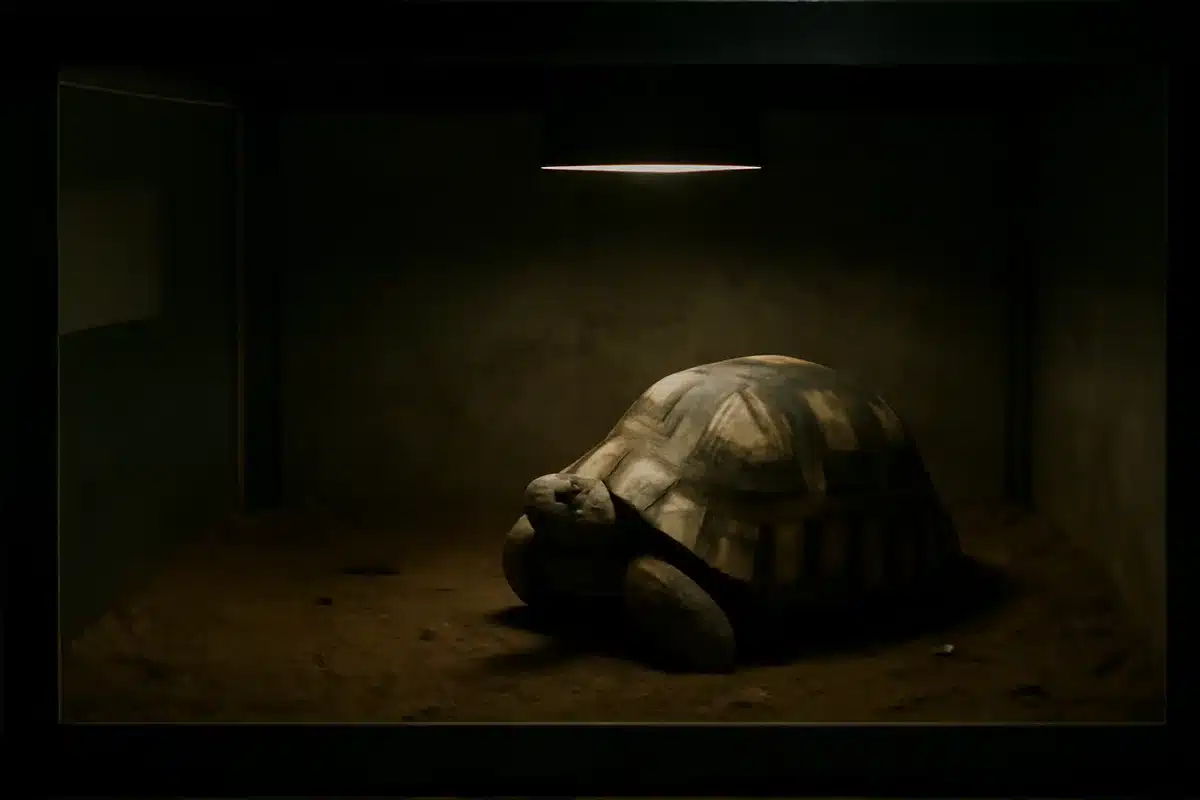
The finale of “Monsters of God,” a five-part HBO docuseries from “Tiger King” creator Eric Goode exploring the exotic reptile smuggling trade, reveals a stunning twist: Ken McCloud, a special agent for the U.S. Fish and Wildlife Service who spent his career pursuing wildlife smugglers, has been keeping a ploughshare tortoise—the world’s most endangered tortoise, with only around 100 remaining in the wild—in his home.
The episode, which aired September 3, shows Goode entering McCloud’s residence with a hidden camera and capturing footage of the ploughshare tortoise in a terrarium in the living room. Goode, who had photographed McCloud and his wife Rose years earlier for a magazine, said he got “upset” when the photo was published because McCloud had wanted to keep the tortoise secret.
Goode explained that McCloud had grown “increasingly paranoid” about the animal being stolen, so protective that he refused to keep the tortoise outside in his backyard. “He got increasingly paranoid and that tortoise became more and more important to him, almost like his only child,” Goode told Variety. During Goode’s last visit to the home, McCloud came out waving a gun, which is why Goode opted for the hidden camera.
“It’s sad,” Goode said. “I asked him, ‘What separates the prisoner from the prison guard?’ and about the ethics of keeping that animal in solitary confinement by itself, and tried to convince him that that wasn’t the best place for that tortoise.”
The ploughshare tortoise, scientifically known as Astrochelys yniphora and also called the angonoka, is endemic to a remote corner of northwestern Madagascar. The species is listed as critically endangered, with fewer than 1,500 individuals remaining in the wild, according to the Turtle Conservancy. The illegal pet trade is a primary driver of its decline—334 ploughshare tortoises were seized between 2002 and 2016, with 280 of those seizures occurring since 2009.
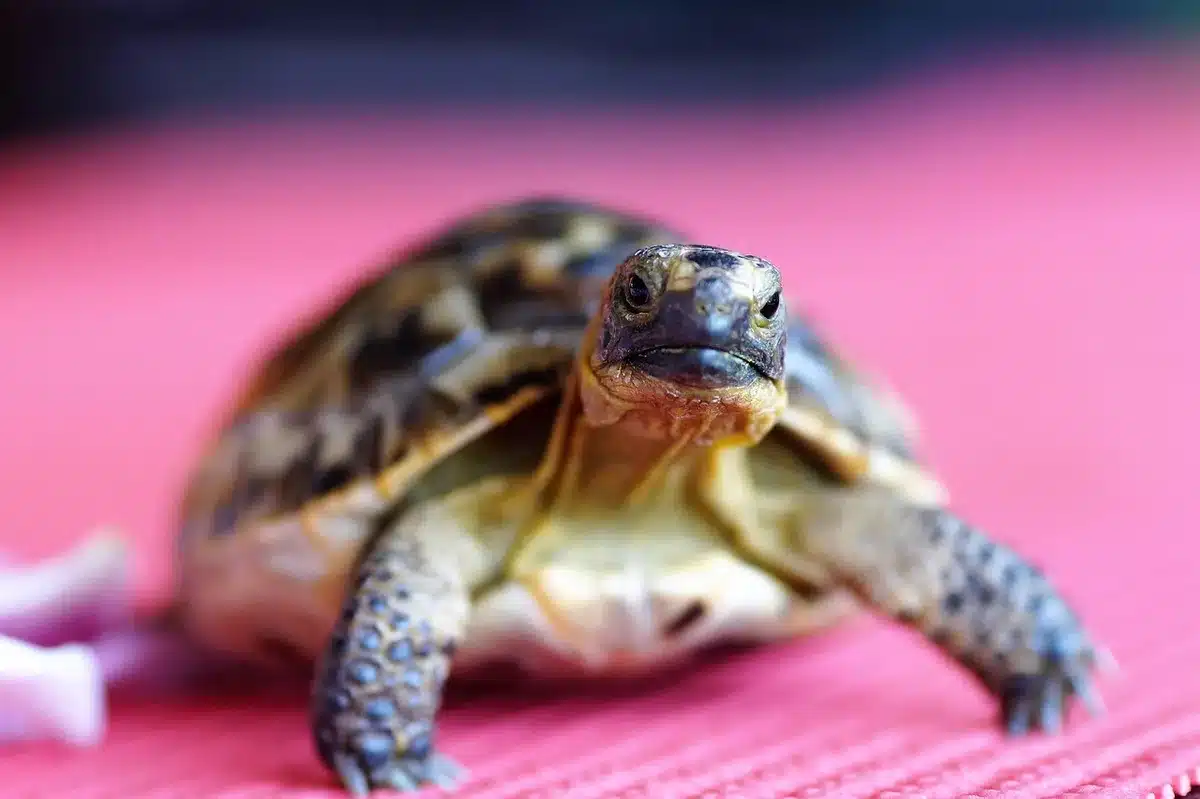
Goode, who co-founded the Turtle Conservancy in 2003, has made the ploughshare tortoise central to his conservation mission. He serves as the U.S. Studbook Keeper for all ploughshare tortoises held in American zoos—a role that requires him to track every individual of the species outside its native Madagascar. His nonprofit has helped protect 65 turtle species and preserved over 70,000 acres of wildlife globally. Goode’s hope is that McCloud’s tortoise will be placed in a breeding colony so it can contribute to the species’ survival. The Turtle Conservancy supports the Durrell-managed breeding center in Ampijoroa, Madagascar, which was the first program to successfully breed ploughshares in captivity.
The revelation underscores a troubling irony: McCloud, who led high-profile undercover operations to combat reptile trafficking, had himself become a collector. McCloud worked as a special agent for the U.S. Fish and Wildlife Service for over 31 years, including dangerous undercover assignments targeting endangered animal smuggling. According to Goode, McCloud “used to work for a reptile dealer in L.A., so he just so happened to end up on the other side of the fence in law enforcement, but he could have ended up on a different side of the fence. He has the fever, or the addiction, if you want to use a drug analogy, so he knew that he wanted those animals.”
The docuseries culminates with Goode’s interview with Anson Wong, a Malaysian wildlife trafficker known as the “Pablo Escobar of animal trafficking,” who operates a vast smuggling network from his fortress in the mountains of Penang. Wong’s operations capitalize on Malaysia’s lax wildlife protection laws and officials open to bribery. Between 1996 and 1998, Wong spearheaded an international smuggling ring that illegally imported and sold more than 300 protected reptiles. He has been arrested multiple times—most notably in 2010 after attempting to smuggle 95 boa constrictors in his luggage—yet has continued operating despite license revocations.
Goode told Variety he is “still talking to people in the government about what to do about” McCloud’s tortoise, drawing a parallel to federal drug enforcement. “If you were an ex-DEA agent who had a garage full of cocaine after you retired, you might think, ‘Hey, we’ve gotta do something about this ex-DEA agent!'” The finale thus delivers a lesson Goode has long emphasized: even those on the side of the law can have unclean hands.
Sources
- Variety — the finale twist involving Ken McCloud and the ploughshare tortoise, Eric Goode’s commentary and conservation background, and the Anson Wong interview
- Turtle Conservancy — ploughshare tortoise population figures (fewer than 1,500 in the wild), Goode’s role as studbook keeper, and breeding program details
- U.S. Justice Department — Anson Wong’s 1996–1998 smuggling ring and the 300+ protected reptiles illegally imported
- Durrell Wildlife Conservation Trust and TRAFFIC — ploughshare tortoise seizure statistics (334 seized between 2002–2016, 280 since 2009)
- BBC News and Mongabay — Anson Wong’s 2010 arrest and conviction for smuggling 95 boa constrictors
- Earth Island Institute and Los Angeles Times — Ken McCloud’s background as a U.S. Fish and Wildlife Service special agent and undercover investigator
⭐ Follow us on Google — Get our new articles in your Google feed.
Similar Posts
- The Valley’s polarizing couple leaving Bravo after three seasons: fans react
- Blue Bird Inn restoration will preserve Detroit music, WXYZ reports
- Halftime Hero casts Eddie Marsan as Harry Redknapp alongside Anson Boon and Ellie Bamber
- Tortoise launches North American run: shows lined up across U.S. and Canada
- Book Riot: best comics and graphic novels for non-comic readers

Hello, I’m Beckett. I cover series and show news for you to make your evenings more captivating.