
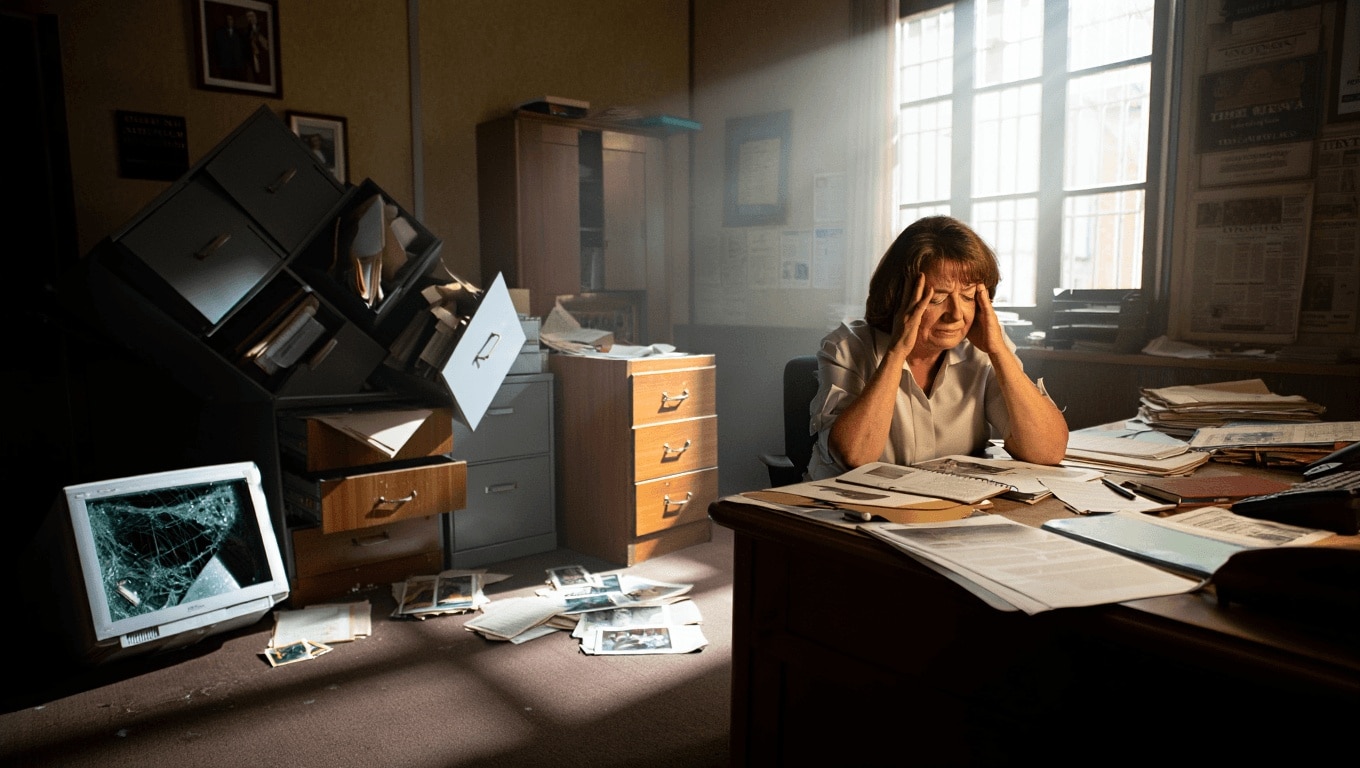
The fallout from a police search that rocked a small Kansas town is now the subject of a prize-winning documentary, thrusting a local controversy into a national debate over press freedom and police powers. Seized — which premiered at Sundance in January and screened this month at the Bentonville Film Festival — reconstructs the August 2023 raid on the Marion County Record and the human cost that followed.
The film, directed by Kansas-area documentarian Sharon Liese, follows the newspaper’s publisher and staff, residents on opposing sides of the dispute and the law enforcement officers involved, painting a close-up portrait of how a local complaint escalated into a constitutional flashpoint.
At issue are questions that resonate beyond Marion: did police overstep legal bounds when they executed search warrants on the newspaper’s office and the homes of staffers, and what protections do reporters and their sources have under the First Amendment and the Fourth Amendment?
The sequence that culminated in the raid began, according to the film, after a local business owner reported that an old driving record — containing a DUI — had been obtained and passed to the paper. Investigators pursued the tip, a judge signed a warrant, and officers moved to seize computers and phones from the newsroom and private residences.
- Key figures: publisher Eric Meyer; his 98-year-old co-owner Joan Meyer; former police chief Gideon Cody; local business owner Kari Newell; reporters including Deb Gruver and Finn Hartnett; former and current mayors Dave Mayfield and Mike Powers.
- Immediate consequences: dozens of devices were taken by law enforcement; Joan Meyer, present when officers arrived, became gravely distressed and died the following day; the police chief who led the operation later lost his job.
- Legal and civic stakes: debate over whether law enforcement improperly targeted a news outlet and whether journalistic materials and communications are protected from seizure.
- Festival run: world premiere at Sundance (January 2026), Grand Jury Award at the Florida Film Festival, and a Bentonville screening in June 2026; additional showings at DC/DOX, True/False, Full Frame and other festivals.
- Distribution: Deadline reports HBO has acquired the documentary, though no official announcement had been made at the time of the Bentonville screening.
Liese and producers fashioned the film as a mosaic of voices rather than a straight timeline, allowing people from opposite sides of the town’s rift to explain their memories and motives. That approach underscores how long‑standing personal tensions fed public conflict, and why getting interviews from key participants was sometimes difficult.
Producers describe how persuading local leaders to appear on camera required time and reassurance that the film would not simply canonize the paper’s publisher. When the current mayor agreed to participate, the team says, other residents felt more comfortable coming forward.
Viewers see both the newsroom perspective — a small paper performing investigative reporting in a community of fewer than 2,000 people — and the viewpoint of residents who felt targeted or wronged by the publication. The film also records the emotional aftermath, most notably the death of Joan Meyer, who was at home when officers attempted to collect electronic devices.
The film does not pretend that every detail is neatly resolved. Investigators and some local figures offer differing accounts of how and why the warrants were sought, and one participant interviewed late in production asked to explain his actions. The documentary leaves those discrepancies visible, inviting audiences to weigh competing narratives rather than prescribing a single moral judgment.
Why the story matters now: the Marion case has become part of a larger conversation about press protections in the digital age, when law enforcement can access reporters’ phones and laptops, and about the responsibilities of small papers reporting on neighbors and local officials. Documentary screenings and the prospect of a broader release through a premium platform make those questions more immediate to national viewers.
- Practical implications for journalists: increased scrutiny of newsroom digital security and new momentum for legal fights over seizure of journalistic materials.
- For small communities: the case highlights how local grievances can escalate and the lasting social damage that follows public investigations.
- Legal watchpoints: potential challenges to warrants that target news organizations, and renewed attention from press‑freedom groups and civil‑liberties lawyers.
Beyond its reportage value, Seized has drawn interest from filmmakers and producers who see a narrative ripe for dramatic adaptation. Liese herself signaled openness to a fictionalized retelling with an established director attached — a signal that the Marion story may reach a much wider audience if a scripted version moves forward.
For now, the documentary’s festival awards and screenings are keeping the Marion episode in the public eye, prompting fresh discussion about how communities balance transparency, accountability and the rights of a free press when law enforcement intervenes. As the film reaches more viewers and distribution details firm up, the case could prompt legal and policy conversations with consequences beyond a single Kansas town.
Similar Posts
- Felipe Bustos Sierra opens up about Everybody to Kenmure Street: Emma Thompson joins podcast
- The Voice singer faces criminal charges after arrest: what prosecutors allege
- Rihanna shooting suspect arrested: woman faces attempted murder charge over home incident
- Rapper arrested hours after hometown concert: known for collab on Kendrick Lamar track
- Bentonville film festival winners: If I Go Will They Miss Me and Jane Elliott doc win top awards

Hello, I’m Declan. I share my film reviews and discoveries with you to enrich your moviegoing experience.