
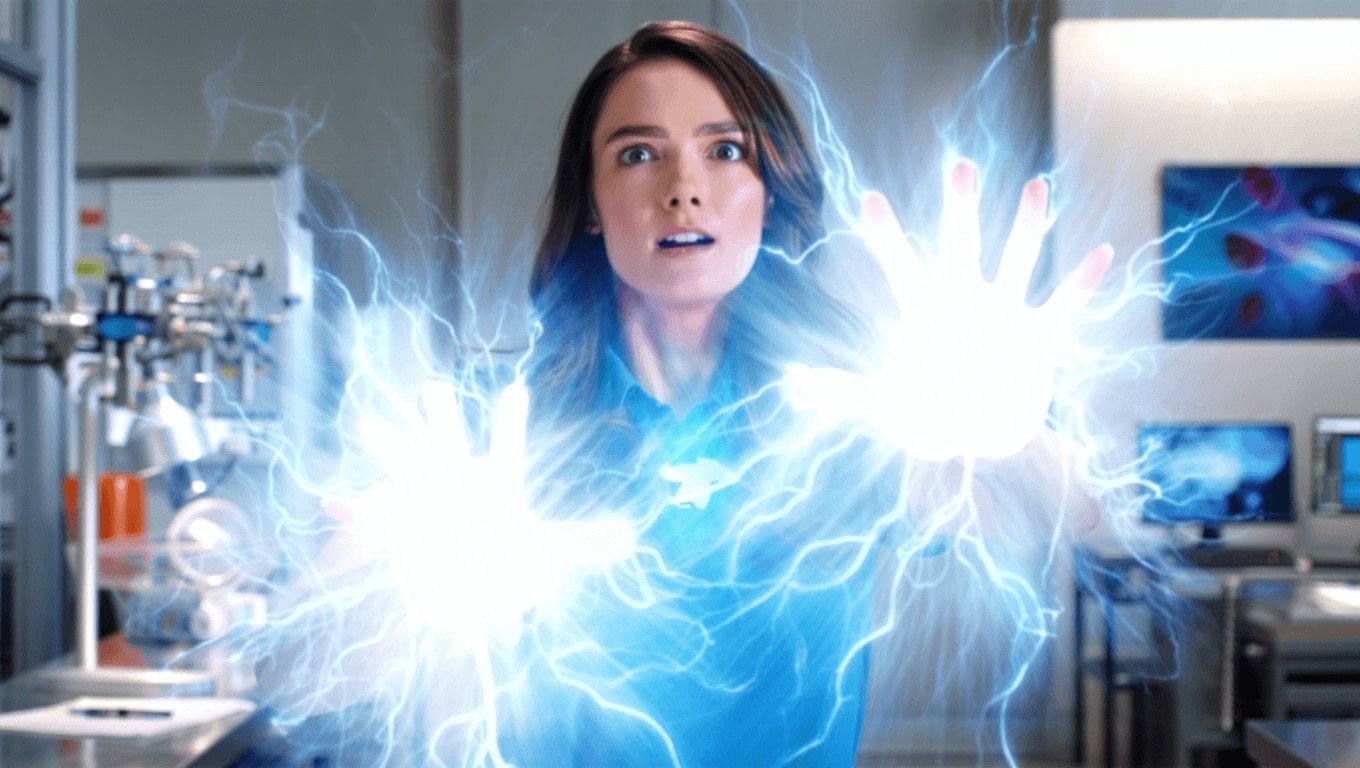
The latest chapter in Ryan North’s Invincible Woman arc jolts the Fantastic Four into a new reality: Susan Storm’s abilities have leapt far beyond force fields and invisibility, and the fallout now touches cosmic threats, SHIELD’s response and questions about Marvel’s wider multiverse. This is a spoilery look at what Fantastic Four #10 delivers and why the changes matter as the series heads toward its anniversary issues.
Malice returns — and not as you remember
The story revives Malice, the Psycho-Man–spawned, cruel copy of Susan Storm, but reframes her as the self-styled **Invincible Woman**. Rather than a simple possession beat, the creative team uses this incarnation to test how far Sue’s light- and force-field manipulation can be pushed when paired with deliberate cognitive alteration.
Earlier scenes established alarming stakes: an instance where invisible-light manipulation removed the Sun from a region, and a direct, ominous communiqué from **Galactus** that made clear Sue’s actions are registering on a cosmic scale. From there the narrative expands outward—into deep-space encounters, alternate-probability versions of the FF, and experiments that let a version of Susan reengineer her own neural wiring.
Where the power goes
Over a handful of issues we watch the Invincible Woman escalate from battlefield dominance to near-omnipotence. Highlights:
- Replicating powers — she demonstrates the ability to mimic other members of the team (and beyond), projecting duplicates that can emulate the Human Torch’s flames, Mister Fantastic’s stretch, The Thing’s strength and even magnetic or electromagnetic effects.
- Neural modification — by altering her own brain patterns she unlocks new applications of her field control, suggesting power increases can be engineered internally, not just learned.
- Cosmic impact — she does something extreme to Galactus, internalizing a destructive effect that the issue frames as creating a black hole inside him, with real implications for how cosmic entities are handled going forward.
These developments force two immediate questions: how does one stop someone who can copy any ability on the fly, and what are the ethical costs if a hero rewires their brain to gain the edge?
An alternate world and a thought experiment
The arc leans into probability theory to justify a different Susan Storm: a chance-born version of Earth where physics and memory diverged enough to produce a darker Sue. The comic nods to the idea that, across infinite possibilities, entire configurations — even conscious minds with false histories — could emerge without the usual cosmological backstory.
That framing does double duty: it allows the Invincible Woman to be terrifyingly powerful while keeping her origin vaguely untethered from established continuity, and it gives the creative team license to stage extreme confrontations that feel consequential but not permanently continuity-breaking.
On the battlefield: SHIELD, allies and unlikely tools
Back on Earth, SHIELD moves aggressively, assembling a mixed roster and using magic, tech and brute force to blunt the threat. The issue features a cross-section of Marvel players—mutual aid that ranges from ritualized spells affecting faster-than-light travel to the reappearance of Valbot/Doombot-style constructs in street-level crime scenes.
Reed Richards also takes a risky path, “stretching” cognition in ways that echo the Ultimate Universe’s Maker—an ominous echo that reads like deliberate foreshadowing rather than coincidence.
- Temporary Power Cosmic — Sue briefly wields a fragment of the Power Cosmic after contact with Galactus, but it does not remain. The transient boost underscores that cosmic power can be catalytic without being permanent.
- New electromagnetic aptitude — after the conflict concludes, Sue retains an expanded command over magnetism and related forces, shifting her baseline capabilities.
What this means for Marvel continuity
There are pragmatic and narrative consequences. Practically, Doom’s tech is now drifting into criminal circles, so expect street-level threats armed with formerly exotic gadgetry. Narratively, the series hints at cross-pollination with the Ultimate line: Reed’s cognitive experiments and the Maker’s looming fate raise the possibility of characters migrating between universes, especially with the Ultimate Universe’s status in flux.
For readers and editors alike, the arc also asks whether heroes should accept enhancements obtained by altering their minds—a question that will echo across future plots and anniversary issues.
Key takeaways
- Sue Storm’s power set has expanded — from light and force-field manipulation to electromagnetic control and the demonstrated capacity to duplicate others’ abilities.
- Cosmic consequences — interactions with Galactus and brief Power Cosmic contact raise stakes beyond Earth-bound threats.
- Continuity hooks — Reed’s cognitive stretching and the presence of Doom-tech in the streets set up potential future crossovers, including links to the Ultimate universe’s Maker.
- Ethical dilemma — the storyline frames self-directed brain modification as both a solution and a moral hazard.
Upcoming issues — what to watch next
- Fantastic Four #11 — The Invincible Woman’s arc closes and SHIELD launches its revamped Future Foundation. Expect fallout from Doom-derived technology entering the public sphere and a two-part A.I.M. plot resurfacing.
- Fantastic Four #12 — The team confronts an alien incursion that targets Earth’s past; Johnny and Reed face temporal consequences as history itself becomes the battleground.
- Fantastic Four #13 — A lighter entry focusing on Johnny’s reckless ideas; a scheme involving Sue’s powers takes an unexpected, personal turn with humorous and hazardous results.
- Fantastic Four #14 — A single-issue event that centers on two adopted children exposed to an alien-borne condition that spares them but threatens everyone else; the pacing favors tension and inventive problem-solving.
- Fantastic Four #15 — Timed for the series’ 65th anniversary, this larger issue pushes the team across history and showcases an oversized, celebratory adventure with stakes in both past and present.
Bottom line: Fantastic Four’s current run uses Susan Storm’s evolution to reset expectations for what a Field-based power can do—scientifically ambitious, morally ambiguous, and narratively fertile. With SHIELD reorganizing, Doom-tech leaking out, and the Maker’s potential return looming, the next few issues are likely to have ripple effects across Marvel’s landscape.
Similar Posts
- Storm spoilers: Ororo’s mom teases finale ahead of issue five
- Fantastic Four #13 reveals Human Torch’s blaze-driven skull gambit
- Sonic the Hedgehog delayed: DC Comics tie-in misses deadline
- Marvel releases One World Under Doom omnibus in March 2027: oversized editions debut
- Kate Mulgrew confirmed for Invincible season 4: what her role means for the show

Hello, I’m Jax. I guide you through the latest comics releases and enrich your geek universe.