
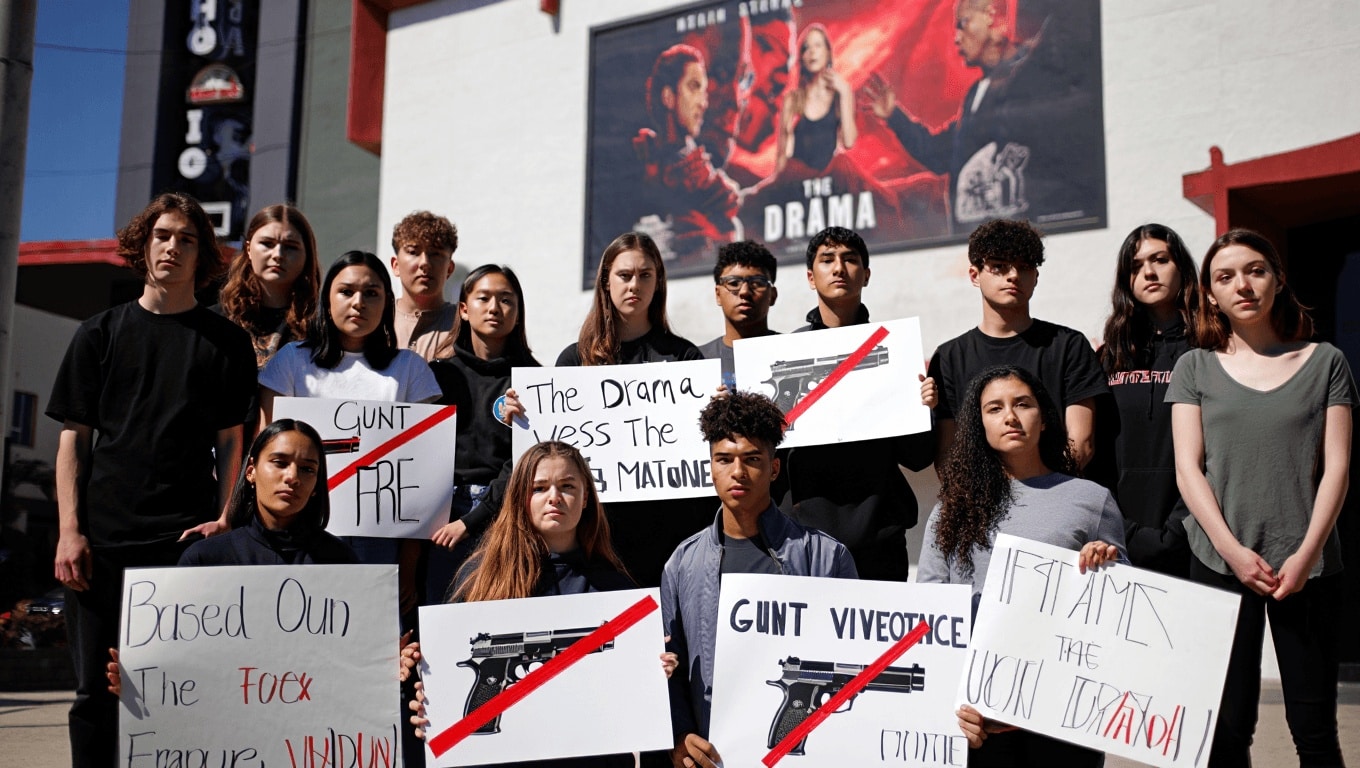
Spoiler alert: this article discusses a pivotal plot beat in Kristoffer Borgli’s new film The Drama. In the days surrounding the movie’s premiere, gun-violence prevention group March for Our Lives publicly challenged the way the studio marketed the picture, saying promotional choices risk downplaying a storyline about a planned — but ultimately aborted — school shooting.
What the advocacy group is objecting to
In a post on Instagram, March for Our Lives argued that the campaign around the Zendaya–Robert Pattinson drama fails to frame the film’s subject matter with the seriousness it demands. The organization said promotion has emphasized tone and surprise over context, which can leave audiences unprepared for an on-screen treatment of an event that echoes real tragedies.
Executive director Jaclyn Corin told IndieWire the studio and filmmakers have an opportunity — and a responsibility — to engage directly with the communities most affected by gun violence instead of leaving interpretation solely to marketing and social-media buzz.
- Concern: the promotional tone may trivialize a plotline involving a proposed school shooting.
- Expectation: artists and distributors should help steer public conversation toward constructive discussion.
- Request: clearer signaling about the film’s intent and more outreach to survivors and families who could be harmed by a misread tone.
Responses and reactions
A24 did not provide a comment when approached about the criticism.
Filmmakers and cast members have said the film aims to provoke thought and debate; promotional materials, however, have centered on dark humor and surprising reveals, according to the advocacy group.
Beyond March for Our Lives, the film has already drawn emotional responses from survivors’ families. Tom Mauser, who lost a son in the 1999 Columbine massacre, told TMZ he found the premise distressing and objected to what he sees as a flippant treatment in some promotional messages.
What leaders in the debate are asking for
Corin suggested one immediate remedy: a public forum — moderated screenings, Q&As or panels — where the director, cast and producers explain the film’s aims and answer the questions of families, survivors and critics. She framed that as a way for the creative team to show respect for people affected by gun violence and to model how to have a serious conversation about it.
| Stakeholder | Position | Suggested next steps |
|---|---|---|
| March for Our Lives | Critical of marketing; worried about trivialization | More contextual promotion; host discussions with survivors and creators |
| A24 | No public response | Clarify messaging; consider outreach |
| Filmmakers / Cast | Say the movie is intended to prompt debate | Engage in post-screening conversations to explain intent |
| Survivors’ families / Critics | Mixed reactions: some offended, some praise artistic risks | Call for sensitivity and clearer framing |
Why this matters now
The clash highlights a recurring tension in cultural coverage: how to present art that intersects with ongoing social trauma. When a major studio and high-profile actors handle a topic tied to lived loss, promotional framing shapes public understanding before anyone sees the film.
For readers, the debate matters because it affects who feels safe engaging with the movie and how conversations about gun violence are steered in the public sphere. Critics warn that shock-driven marketing can obscure nuance and make it harder to have the kind of sober, solution-oriented dialogue organizations like March for Our Lives say they want.
Early critical reaction has been mixed. Several reviewers praised the performances — including those of Zendaya and Robert Pattinson — while noting the film’s dark comic tone and its readiness to unsettle audiences. One industry critic described the picture as provocative and likely to leave viewers talking as they exit theaters.
Whether A24 and the filmmakers will respond with the direct engagement advocates are requesting remains open. The conversation over promotion, tone and responsibility is unfolding in real time — and for many observers, how it is resolved will be as noteworthy as the film itself.
Similar Posts
- Cyrille Bolloré pushes back against call to sideline him: says he has no political agenda
- Barthélémy Grossmann joins Artist International Group: Father Joe director gets management
- ‘Ebenezer’ Venmo profile for Scrooge is circulating online
- Elon Musk accuses Nolan of awards-driven casting: Lupita Nyong’o named Helen of Troy
- Netflix hit: new true crime doc becomes the week’s most-watched show

Hello, I’m Declan. I share my film reviews and discoveries with you to enrich your moviegoing experience.